Achievements
Selected dives and projects.
Deep explorations over the last 30 years.
-
202.5 m
Blue Hole, 2000
-
239 m
Sra Keow, 2007
-
200 m
Deepest traverse, 2015
- Blue Hole, Dahab: 202.5 m (2000)
- Sra Keow: to the bottom at 239 m (2007)
- Sra Keow traverse: 200 m deep (2015)
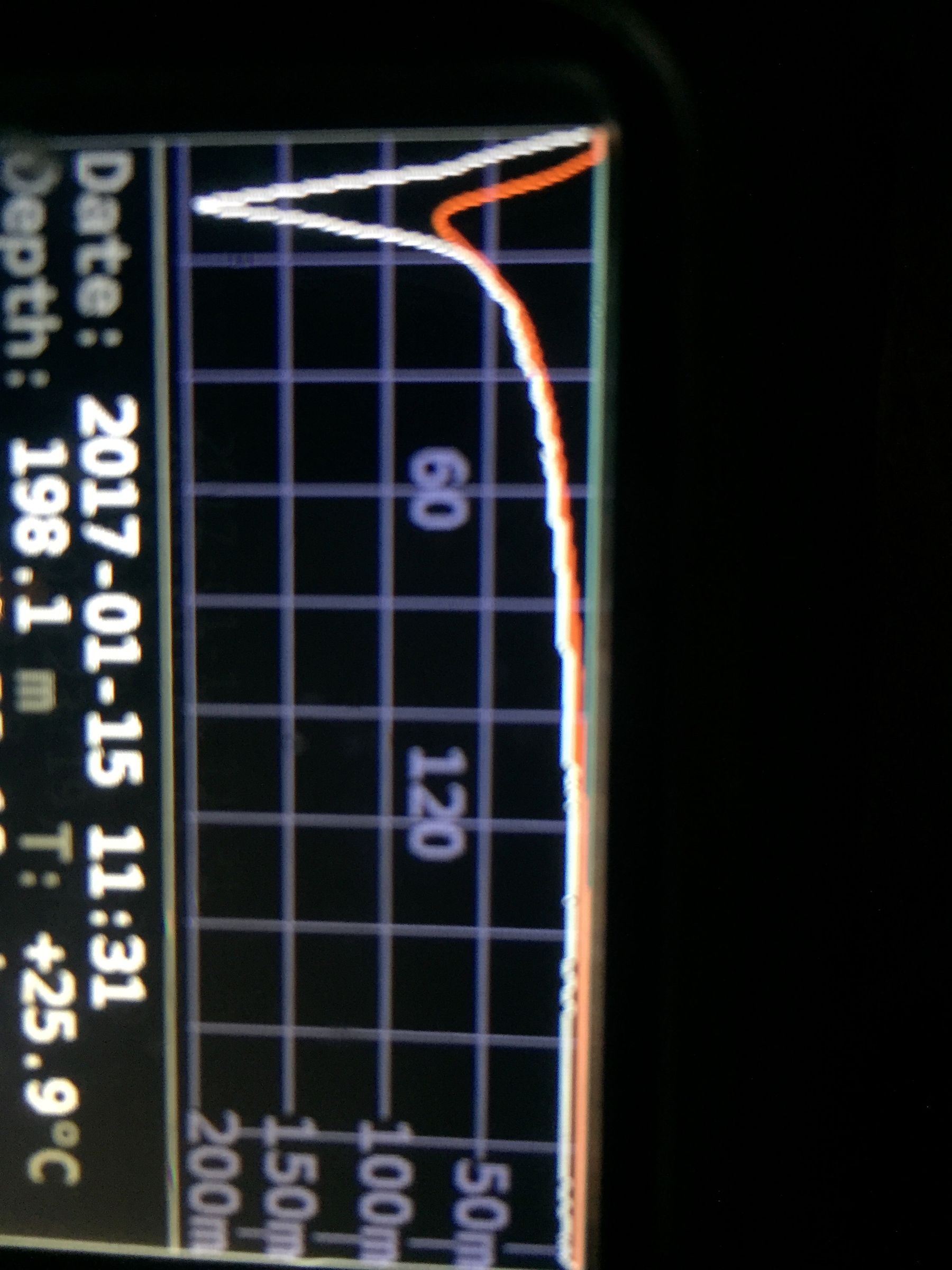
- Song Hong: 198 m (2017)
- Tham Luang cave rescue (2018)
- USS Grenadier: finding a lost submarine (2019–2020)
- Landenouse: 200 metres of new line (2024)
Blue Hole, Dahab: 202.5 metres
March 2000
Before the caves, there was the Red Sea. Ben worked as an instructor in Egypt for about four years. The Blue Hole near Dahab, on the east coast of Sinai, is a deep, clear sinkhole known for its many diving accidents.
In March 2000, Ben dived it to learn more about deep diving. He descended to 202.5 metres solo: free-swimming, with no descent line to the bottom, carrying all his own gas. His buddy Leigh Cunningham and a small team stood by as safety divers. At the time it was the deepest open-ocean scuba dive made this way.
The dive confirmed what he still teaches: deep diving depends on planning, gas management, teamwork and discipline.
Sra Keow: to the bottom at 239 metres
18 February 2007
Sra Keow is two small pools at the foot of a limestone tower near Krabi, above a deep flooded cave. Divers had pushed it step by step: Matt London to 120 m in the 1990s, then Christophe Verdier and Mike Gadd to 150 m and 201 m on rebreathers in 2005 and 2006.
In February 2007 Ben returned with a small team to find the bottom. The plan was mixed-gas open circuit, with staged decompression cylinders, a habitat for the long shallow stops, and support divers Maurizio Carmine and Laurent Bihler.
Visibility was under a metre at 12 m. Ben descended past the stage cylinders, found tangled line at the 150 m tie-off and followed the old line to Mike Gadd's last tie-off at 186 m, then laid new line. Around 190 m he felt the tremors of High Pressure Nervous Syndrome. He reached the silt floor at 239 m, with no continuation.
The ascent took most of the dive: a confusing line junction at 80 m, decompression cylinders buried in silt at 60 m, inner-ear problems at 39 m, and hours of stops while the support divers collected his cylinders. Ben surfaced about 10 hours after entering the water.
At the time it was listed as the fifth-deepest cave dive in the world.
Sra Keow traverse: 200 metres deep
6 March 2015
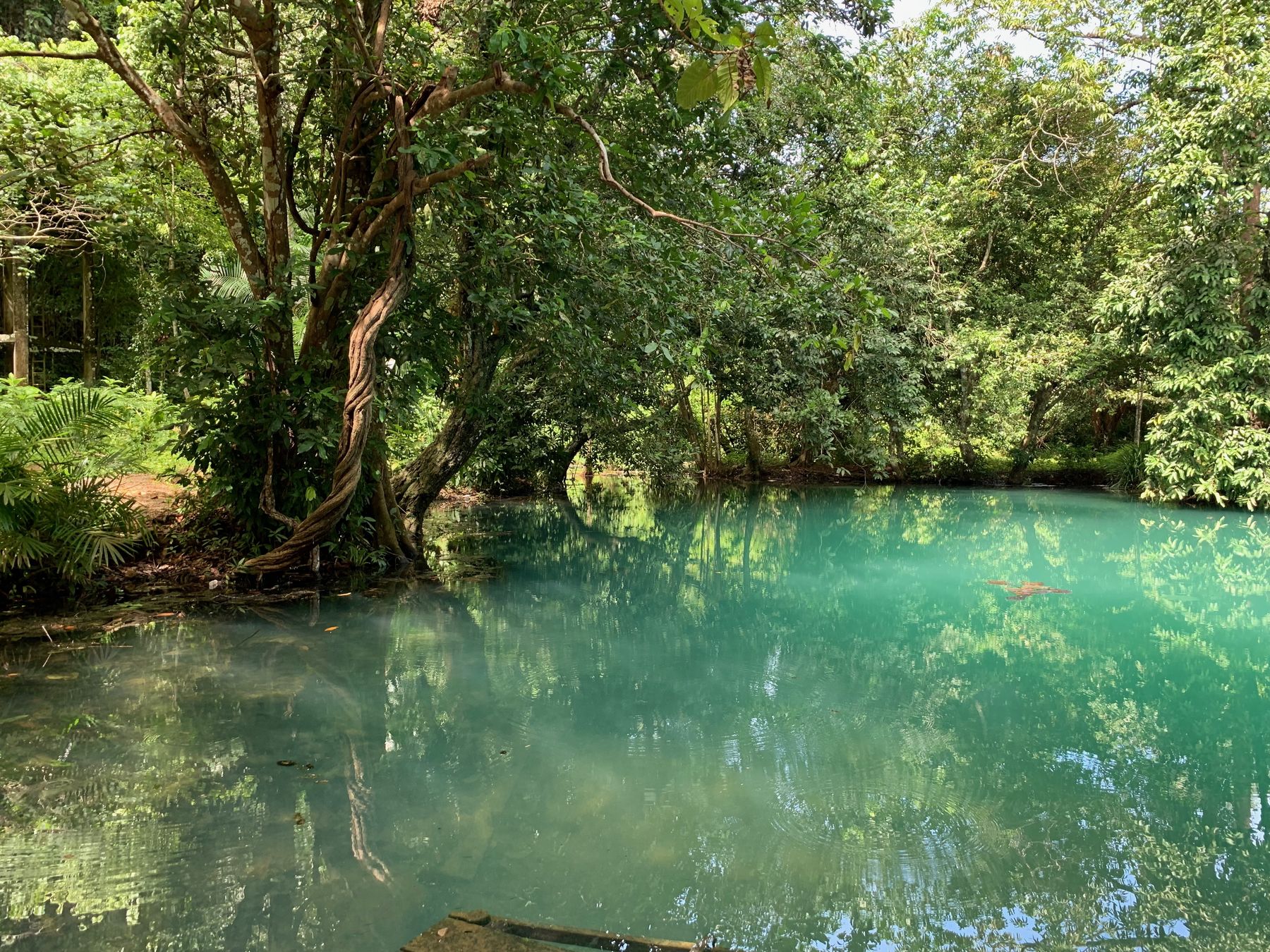
Eight years after reaching the bottom, Ben came back to Sra Keow with a new question. The cave has two entrance pools. The divers knew they joined at about 70 m, but were the two deep parts of the system also connected? The only way to find out was a traverse: dive in through one pool and surface through the other.
This time Ben dived two rebreathers on one harness, with 20-litre stage cylinders. The full setup weighed 95 kg. To stay clear of High Pressure Nervous Syndrome he breathed a mix with a very high helium content. Safety divers Don McFadden and Ralf Wagnersen supported him to 85 m. Beyond that he was alone, following Matt London's old guideline from the 1990s down to about 200 m, where it ended.
There he found the connection between the two parts of the system and swam through it, then made the long decompression back up through the other side. Visibility was so poor that photography was almost impossible.
The dive set the world record for the deepest traverse in a flooded cave. Ben presented it at OZTeK 2015 in Australia.
Song Hong: 198 metres with Dr Richard Harris and Craig Challen
15 January 2017
Song Hong, "two rooms", is a collapsed sinkhole in Thung Yai district, Nakhon Si Thammarat. Two lakes join underwater at about 40 m. Below that the cave opens into a very large tunnel, by Ben's estimate roughly 200 m wide and 100 m high.
Blue Label Diving made Song Hong its deep project. At the end of 2012 the team installed an underwater habitat and two decompression platforms, so divers could spend the long final stops warm, dry and on oxygen. Expedition by expedition the line went deeper: 155 m in 2012, then 177 m, on rebreathers, scooters and seven different gases, in dives of six hours and more.
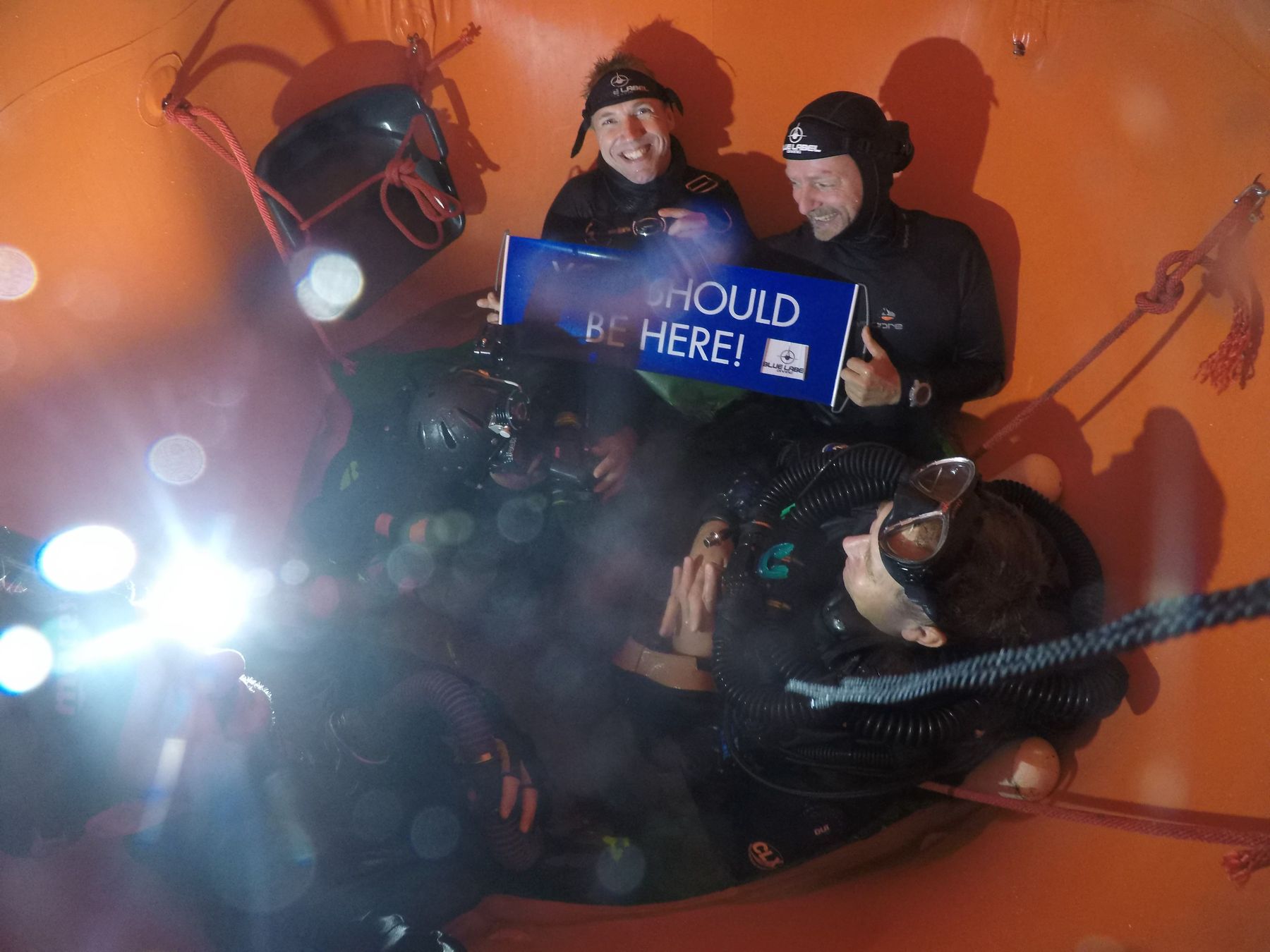
The deepest push came on 15 January 2017, with two divers from the Australian "Wet Mules" team: anaesthetist Dr Richard Harris and veterinarian Craig Challen, known for deep exploration at home in Australia and New Zealand. Diving rebreathers with Ben, the team reached 198 m in Song Hong.
In July 2018 all three were part of the rescue at Tham Luang, in the north of Thailand.
Tham Luang cave rescue
June–July 2018
On 23 June 2018, twelve boys from the Wild Boars football team and their coach went into Tham Luang Nang Non cave in Chiang Rai province. Monsoon rain flooded the cave behind them. The search grew into one of the largest rescue operations in the world, with more than 10,000 people and over 100 divers.
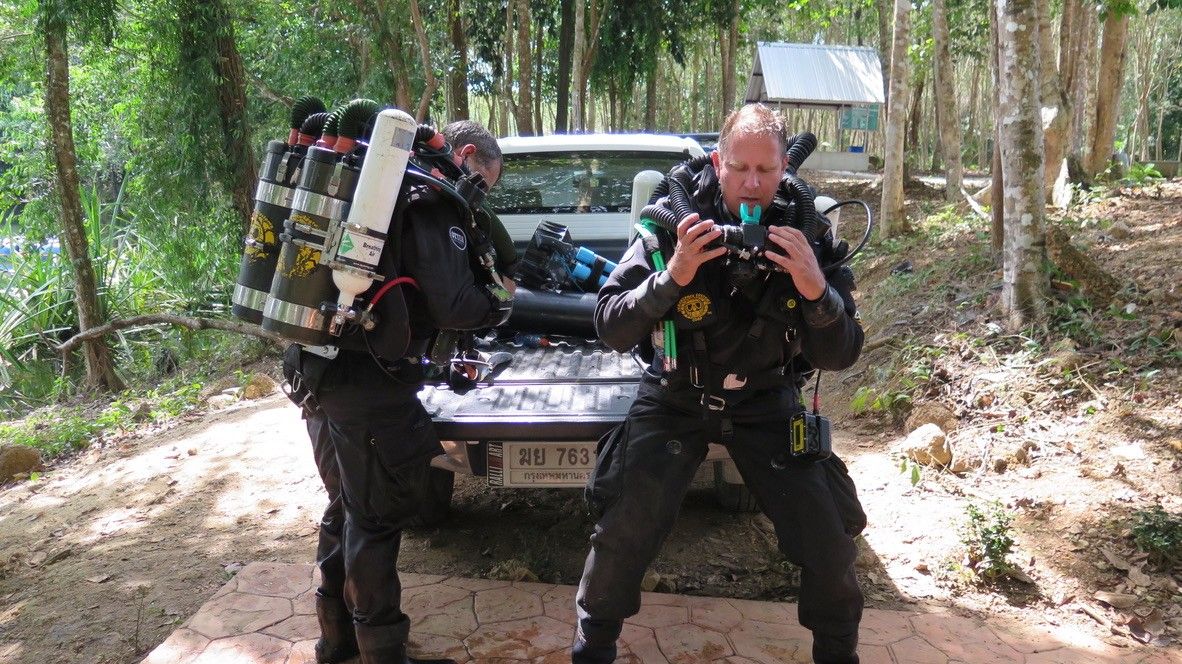
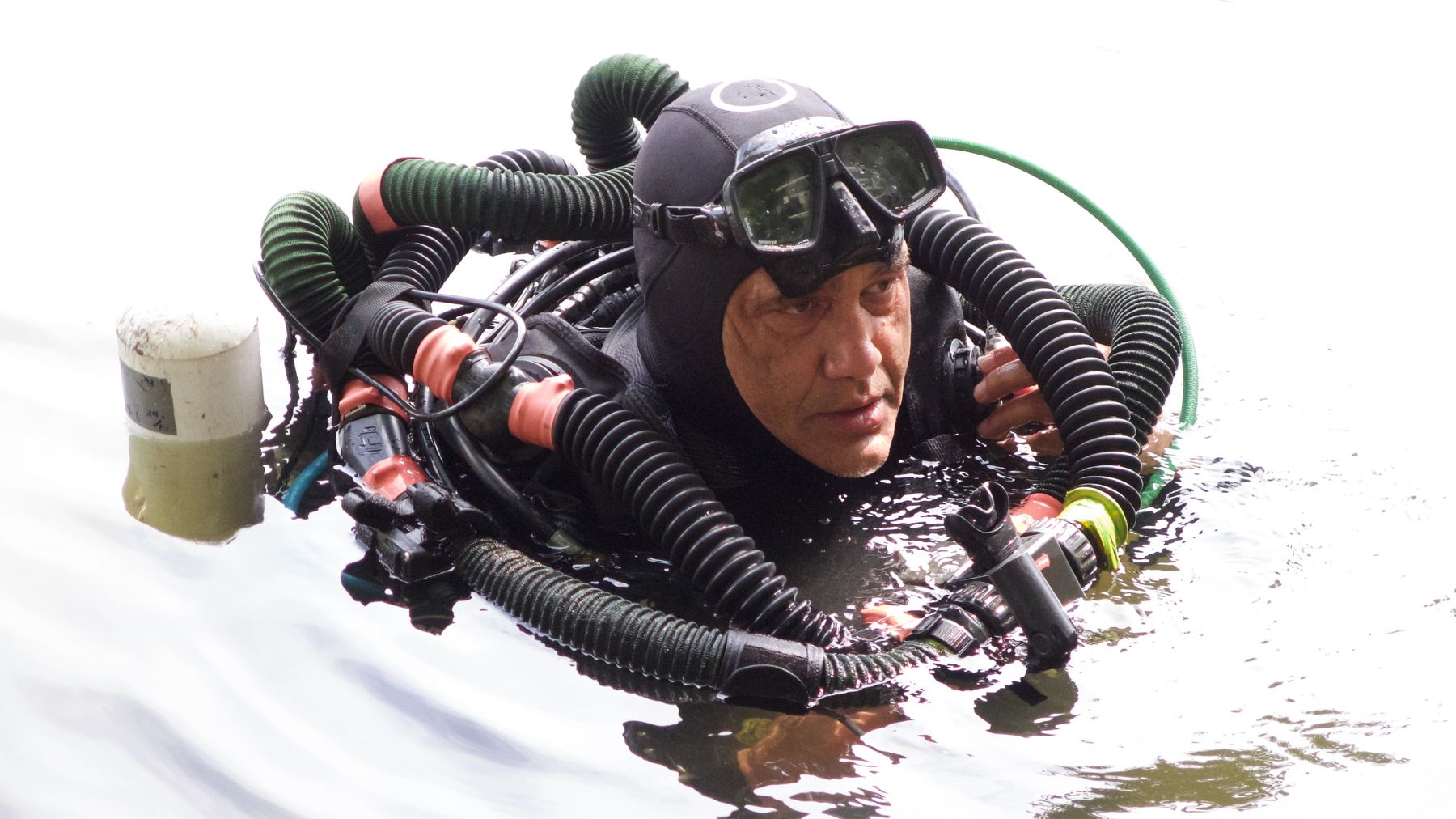
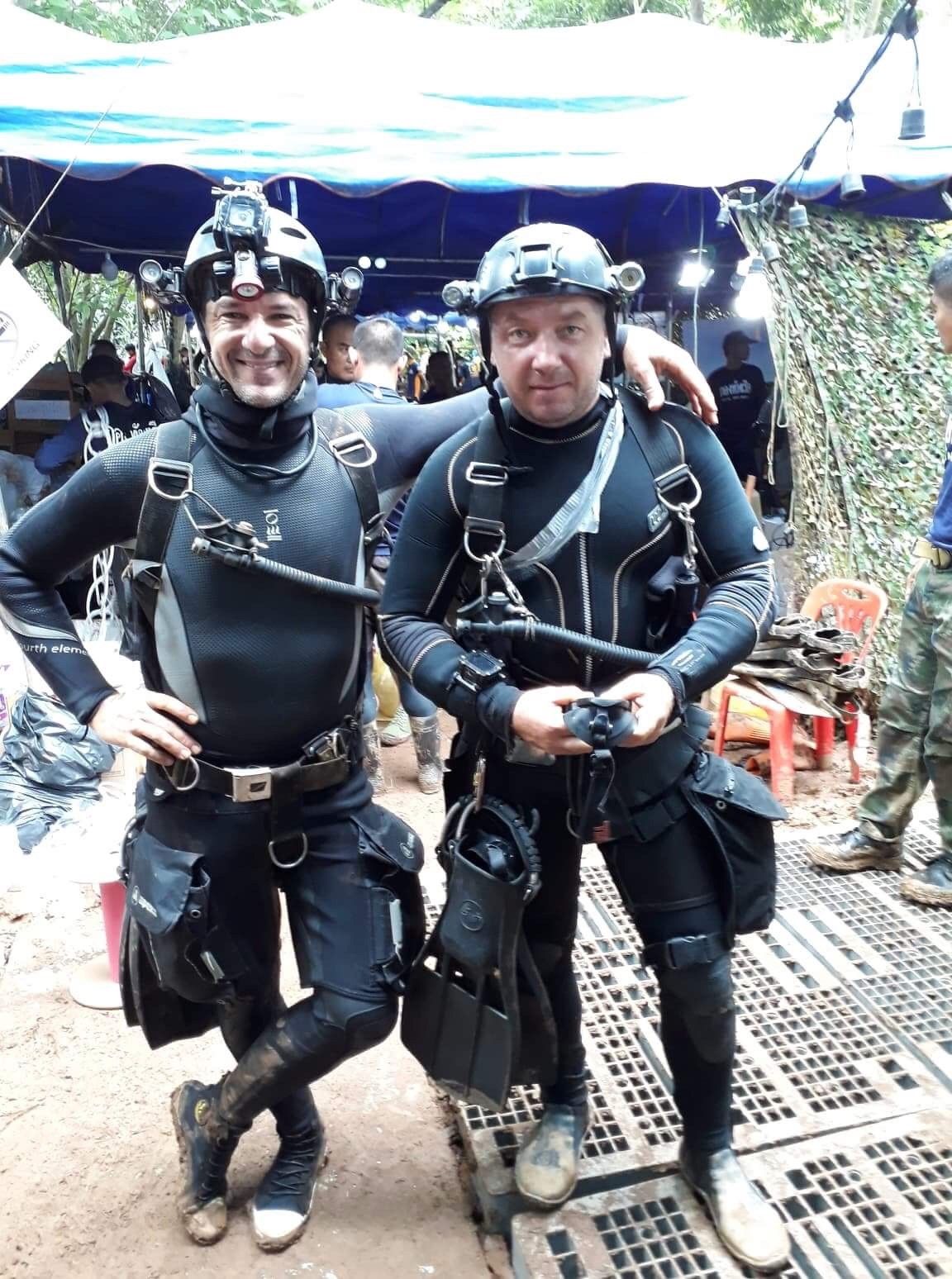
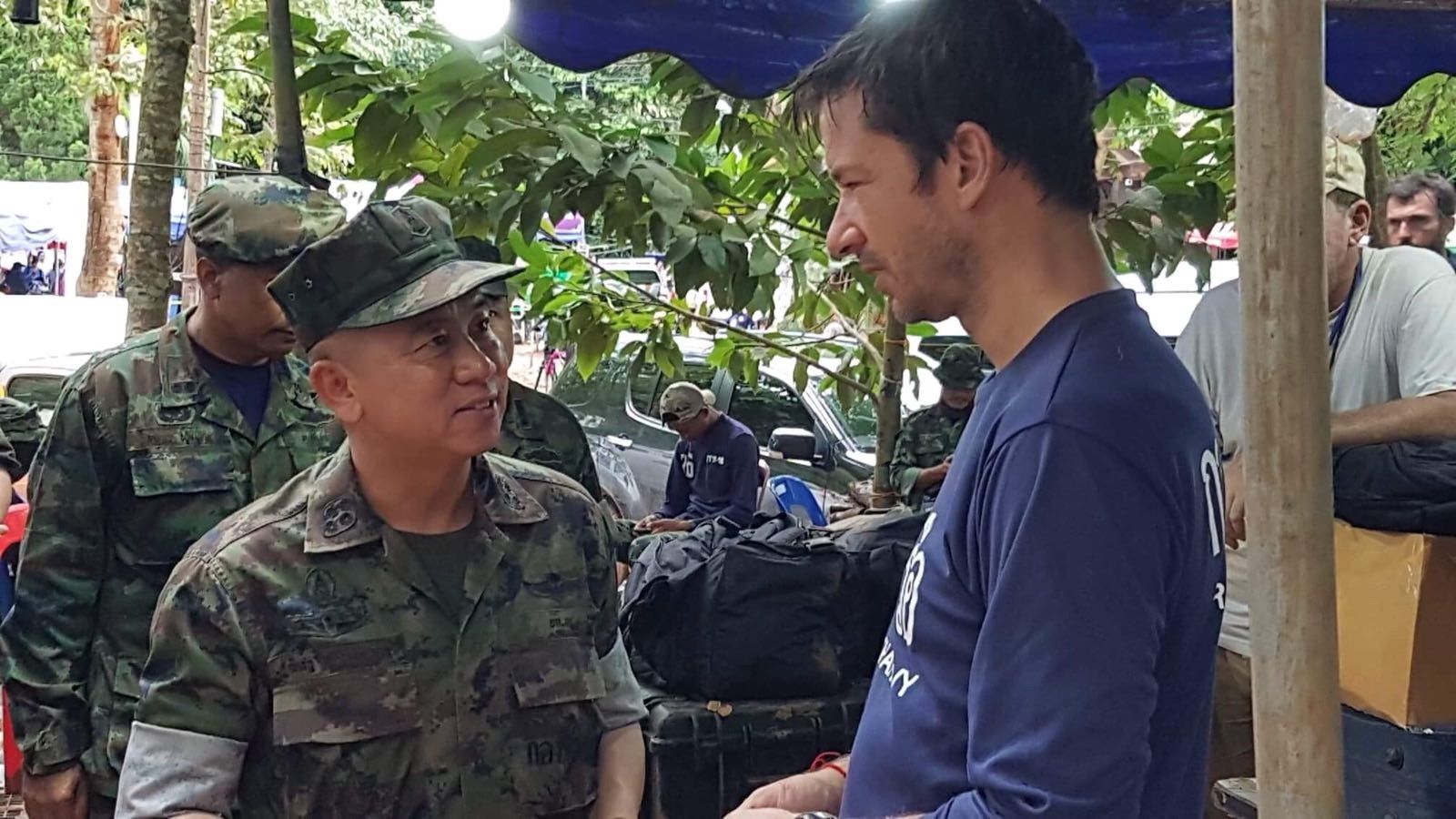
On the evening of 27 June, Ben got a call from a Royal Thai Navy liaison officer: could he come and support the Navy SEALs? At the time he ran Blue Label Diving in Phuket and was known for deep cave exploration. He flew north, followed a few days later by his dive buddy Maksym Polejaka.
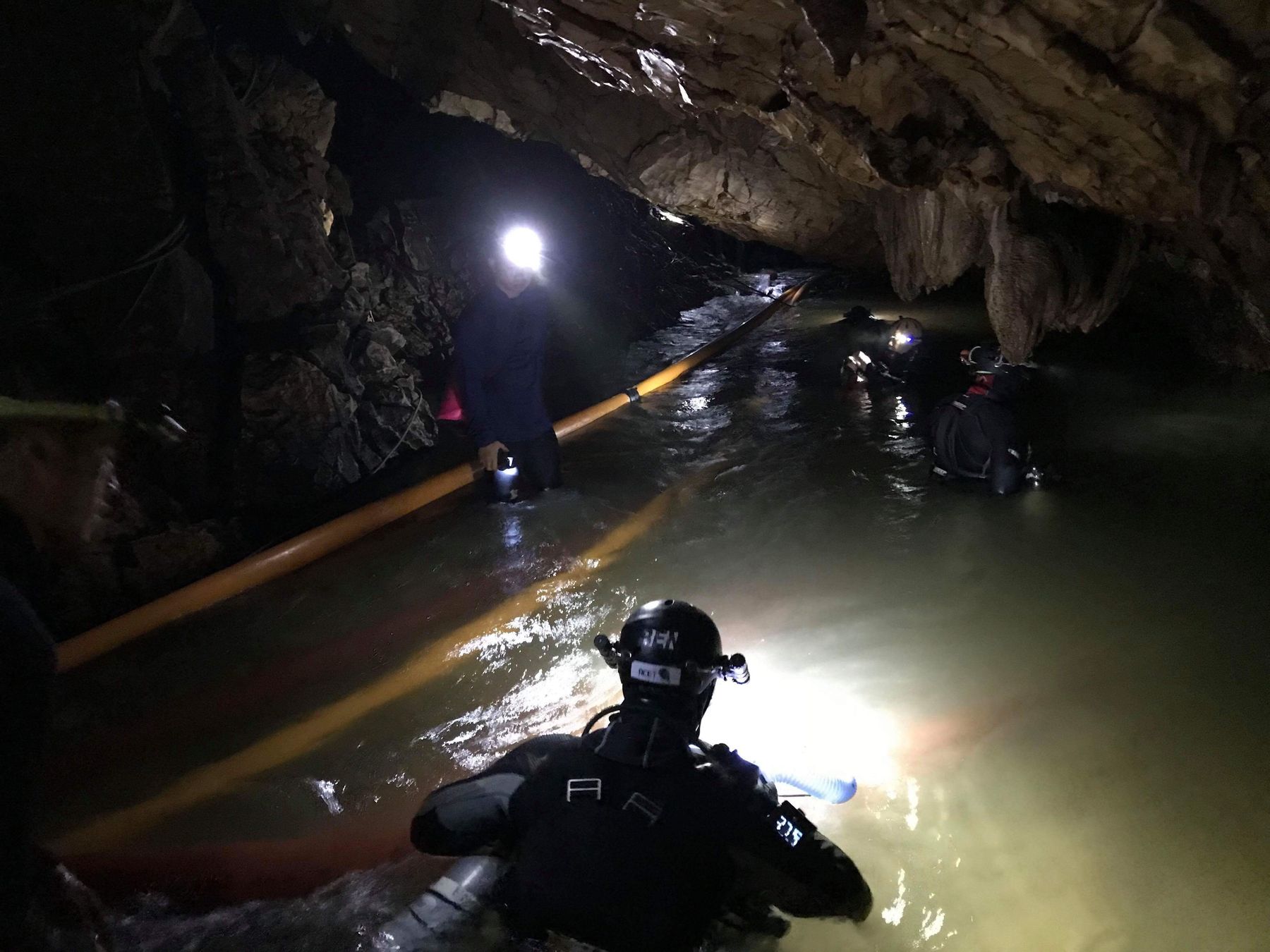
Tham Luang is a dry cave that had flooded. The first sections meant fighting strong currents, crawling over muddy rocks with heavy equipment, and breathing poor air. Beyond Camp 3 the passages were fully flooded, with zero visibility and restrictions as narrow as 48 cm. The only map was 30 years old.
Ben's first task was to lay a rope from Camp 3 towards Pattaya Beach, the chamber where the boys were thought to be. On his first attempt a strong counter-current stopped him after about 200 m. He went back and laid about 200 m of line in the right direction. The next day, using the old French map and a tip from a British geologist, Ben and Maksym connected the T-junction with the passage towards Pattaya Beach, following the Navy SEALs and picking up where they had turned back. Days of 10 to 12 hours, with dives up to 12 hours long, became normal.
On 2 July the British divers Rick Stanton and John Volanthen pushed on past the end of the line and found all 13 alive. Over the following days an international team of divers, including Dr Richard Harris and Craig Challen, brought them all out.
Ben and Maksym's footage appears in the documentary 13 Lost. For his part in the rescue, King Philippe of Belgium appointed Ben a Knight of the Order of Leopold, by Royal Decree of 14 October 2018. The Knight's Cross was presented to him at the Belgian embassy on 13 September 2019.
USS Grenadier: finding a lost submarine
October 2019 – March 2020
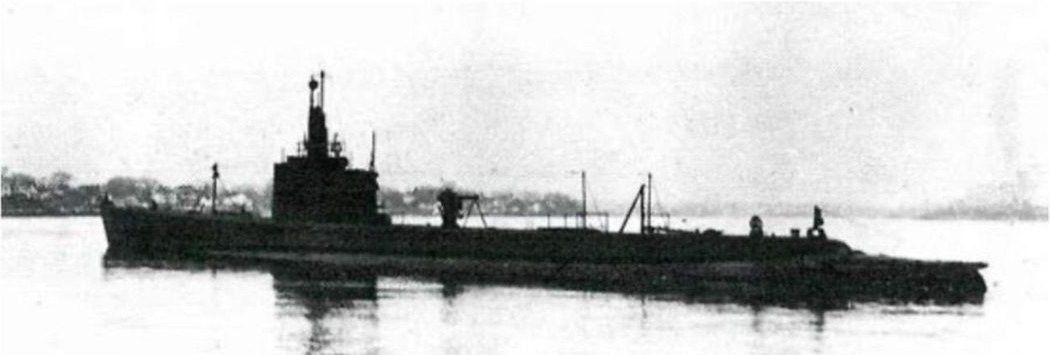
On 21 April 1943 the US submarine USS Grenadier was on patrol off Phuket when a Japanese plane caught her diving too slowly. Two bombs knocked out her power and started a fire. She lay on the seabed for 13 hours, and when she finally surfaced she was too badly damaged to fight or run. The next morning the crew destroyed the codebooks and scuttled her.
All 76 men were taken prisoner. They were held and beaten in Penang, then moved to prison camps in Japan. Four of them died before the end of the war. The submarine was never found.
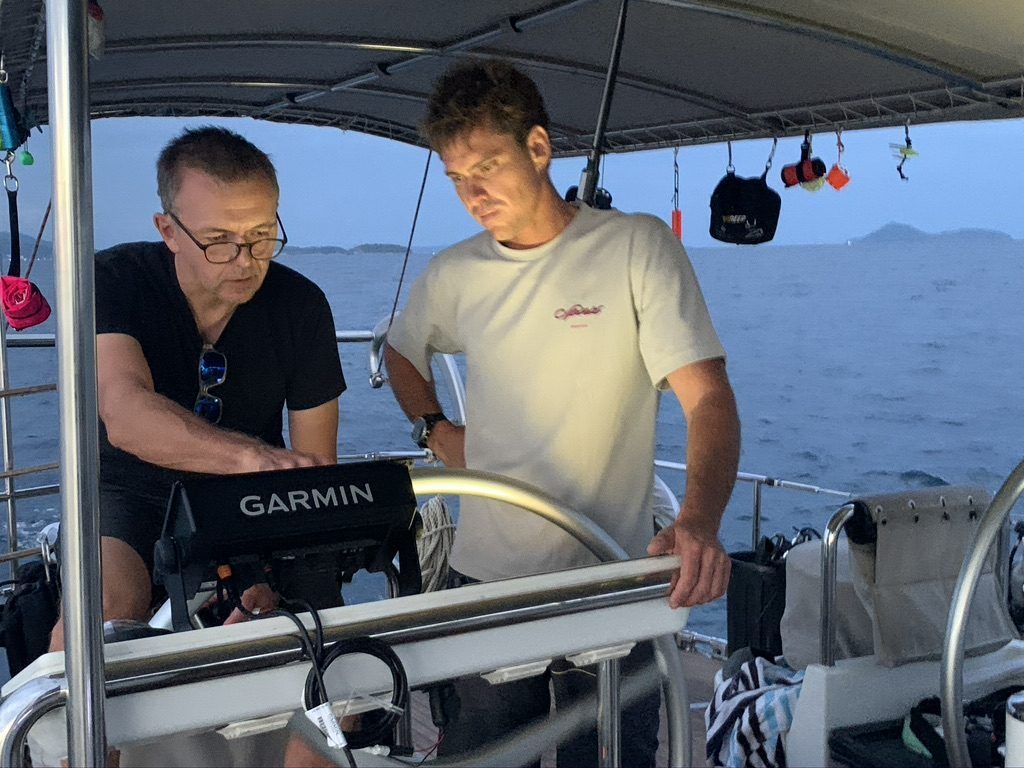
Ben spent years researching where she might lie. Together with Lance Horowitz, Jean Luc Rivoire and Benoit Laborie, he asked local fishermen where they had lost nets on something big on the bottom. Then the team searched those areas with side-scan sonar.
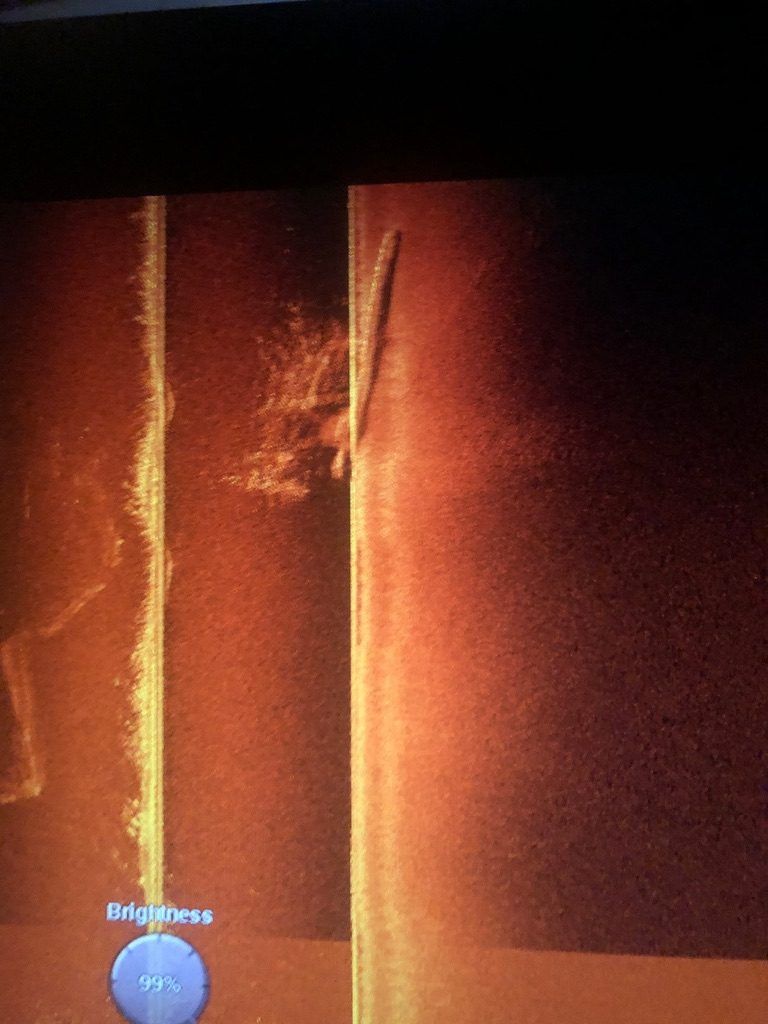
In the Strait of Malacca, about 150 km south of Phuket, the sonar showed a long shape on the seabed at about 80 m. It was much bigger than the team expected.
Between October 2019 and March 2020 the team made six dives on the wreck. The submarine sits upright, partly covered in fishing nets. There was no nameplate, so the divers measured the wreck and compared it with the US Navy's original drawings and archive photos. Hatches, fittings and dimensions all matched.
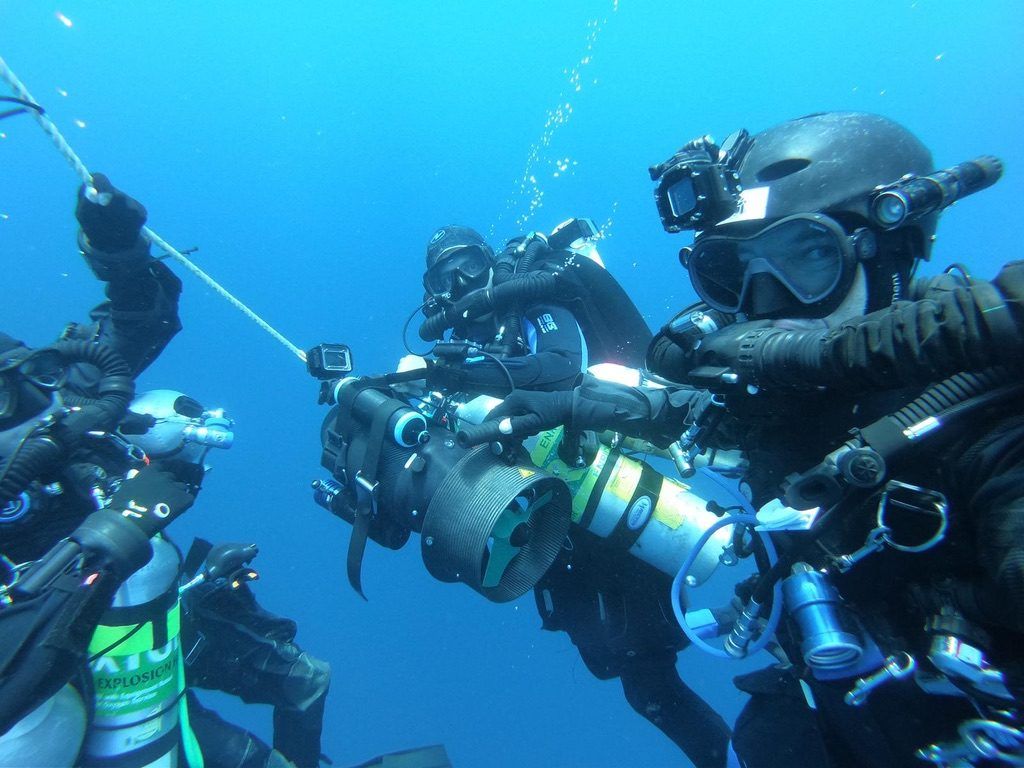
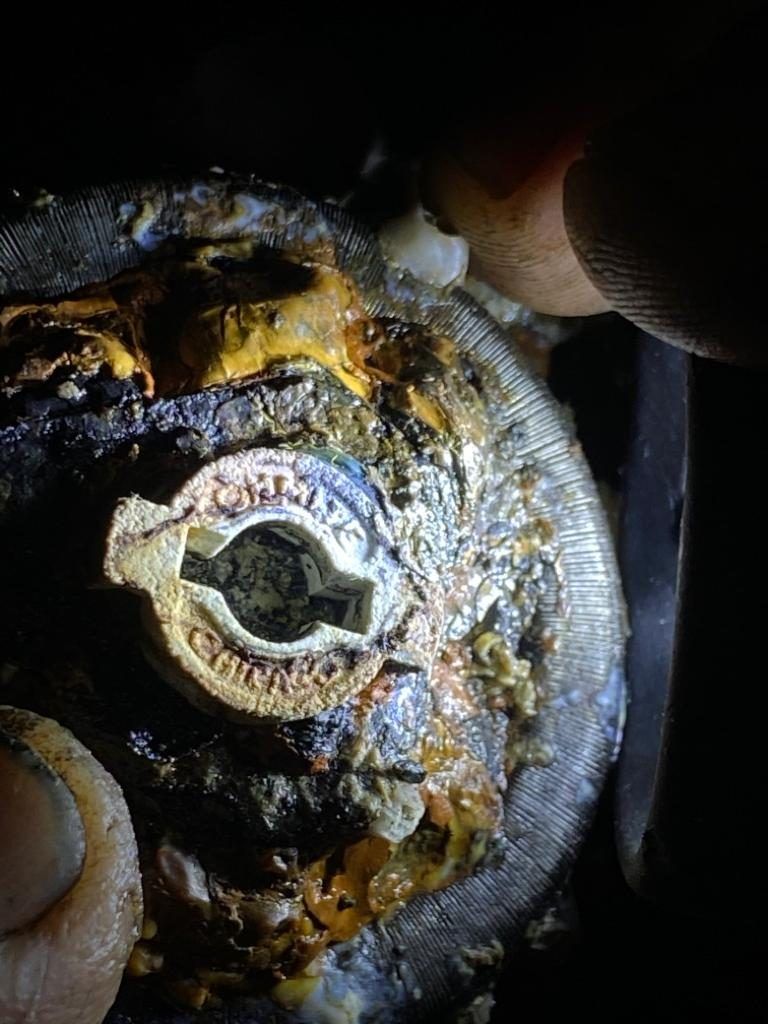
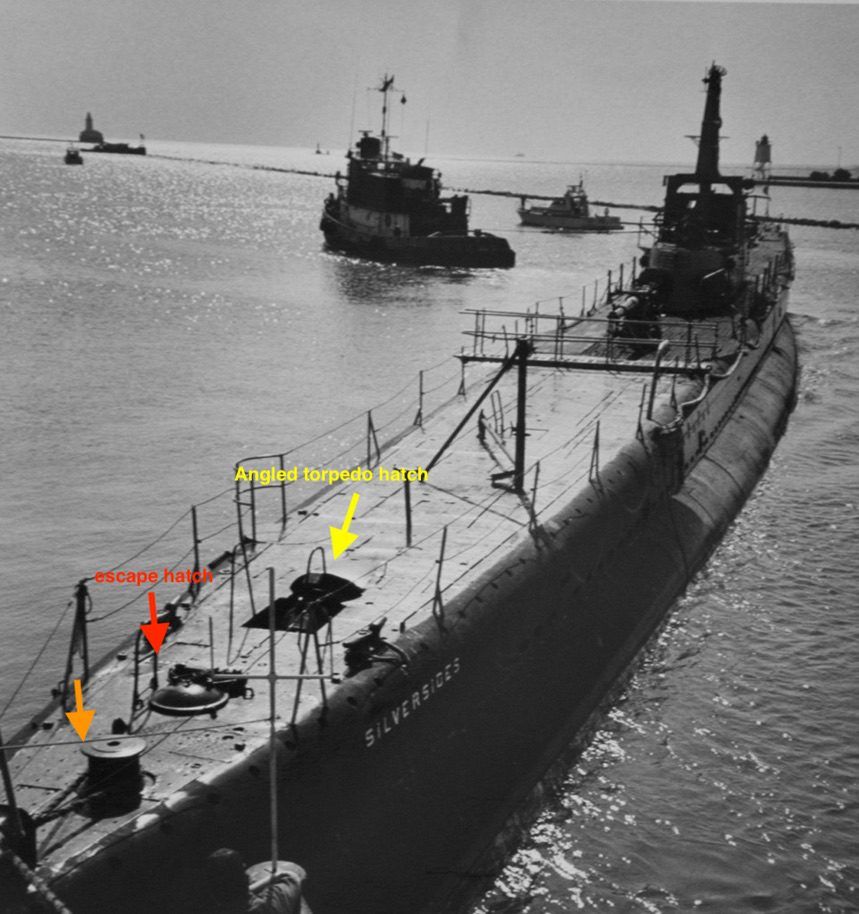
The team sent its evidence to the US Navy's Naval History and Heritage Command. In September 2020 the find made news around the world, including in The New York Times.
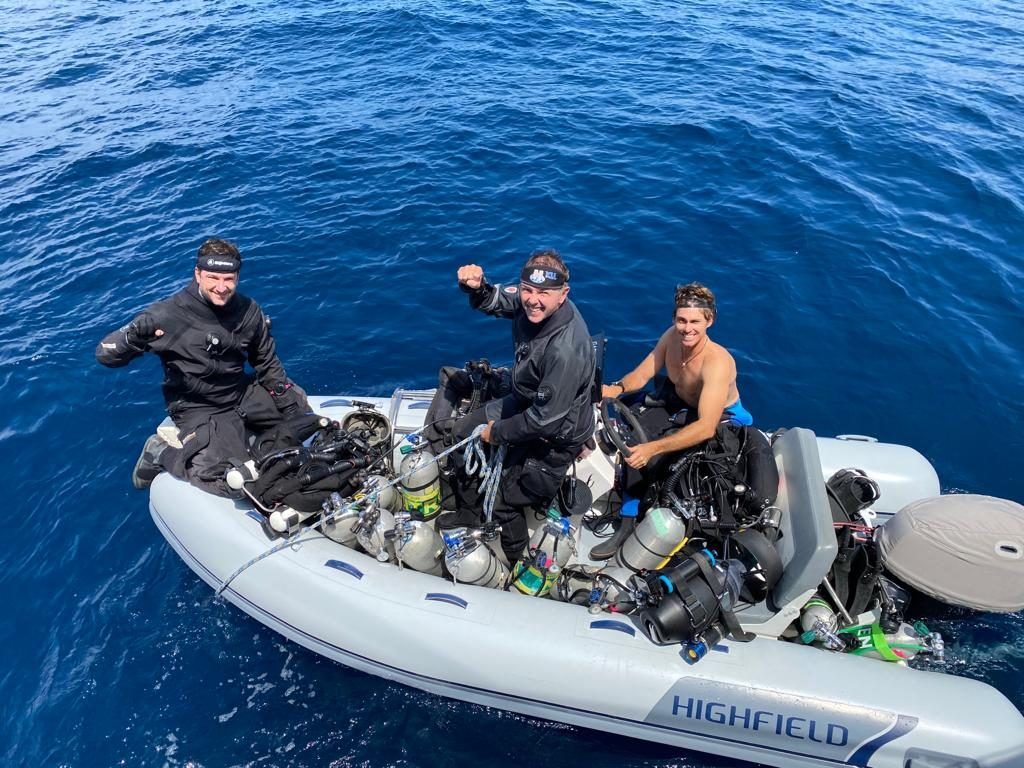
Read more in Live Science: Divers discover lost WWII submarine wreck off Southeast Asia.
Landenouse: 200 metres of new line
16 August 2024
Landenouse is a spring near Cajarc in the Lot, under steep cliffs beside the river. Its stone pool is one of the birthplaces of French cave diving. Unknown divers laid the first 160 m of line. In 1976 G. Bugel and C. Touloumjian reached 370 m, and in 1980 Olivier Isler and Claude Mangin reached 1,000 m. Jochen Hasenmayer added 200 m more and stopped on a gravel slope at 90 m, where his diving knife is still tied to the line.
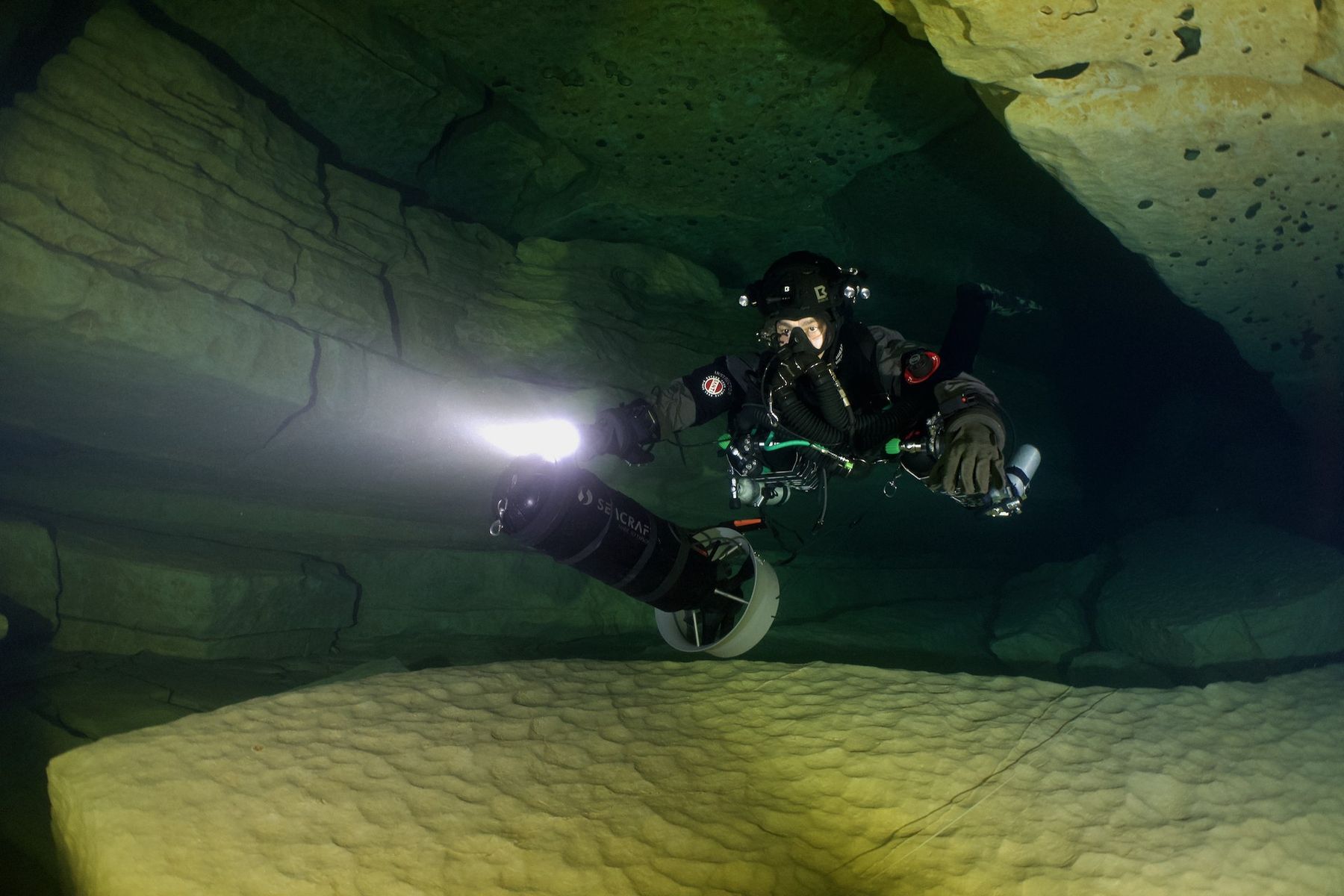
Ben first came to Landenouse more than ten years ago to teach a rebreather cave workshop, and returned many times. In recent years Xavier Méniscus extended the line, and Kris Robbroeckx and Frédéric Swierczynski pushed further and found a deep vertical shaft. Divesoft converted its Liberty rebreather into a sidemount unit for the project, and Seacraft supplied long-range scooters. Torsten Schnitter's Hidden River Project provided the map, and Laurent Miroult took the photos.
On 16 August 2024 Ben and Kris dived as a team of two. They reached the 70 m mark after about 25 minutes, continued down past 119 m to the shaft at about 122 m, and followed the line to its end. There they extended it by about 200 m before turning back, with more than four hours of decompression ahead. On the way out Ben got tangled in the line and had to cut himself free. In total the dive meant about six hours of decompression.
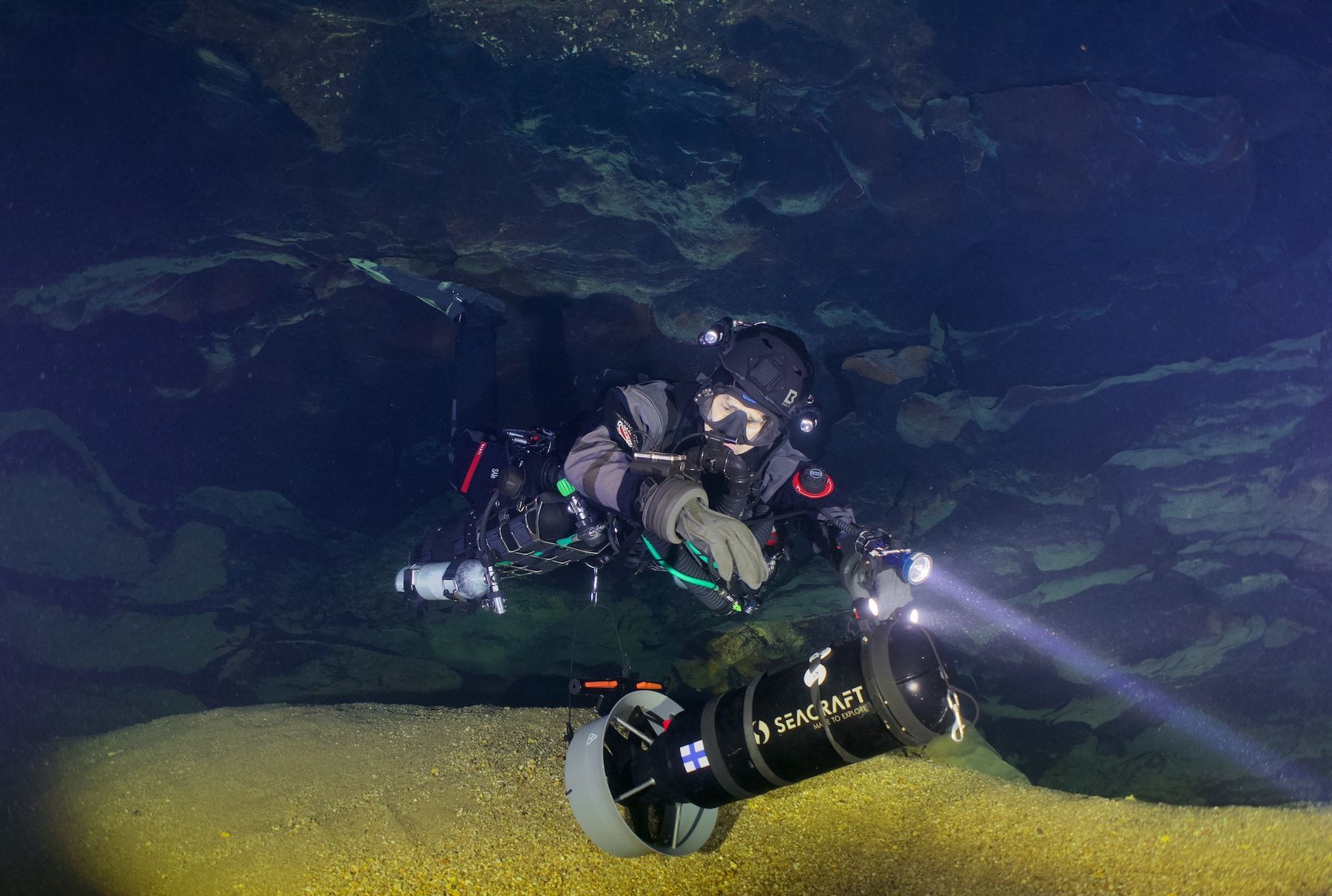
Read the full story in InDepth: A Decade of Cave Diving in France's Landenouse.
Book a course
Interested in a course?
Tell us what you dive now and what you want to learn. We will suggest the right course and send you dates and a price.
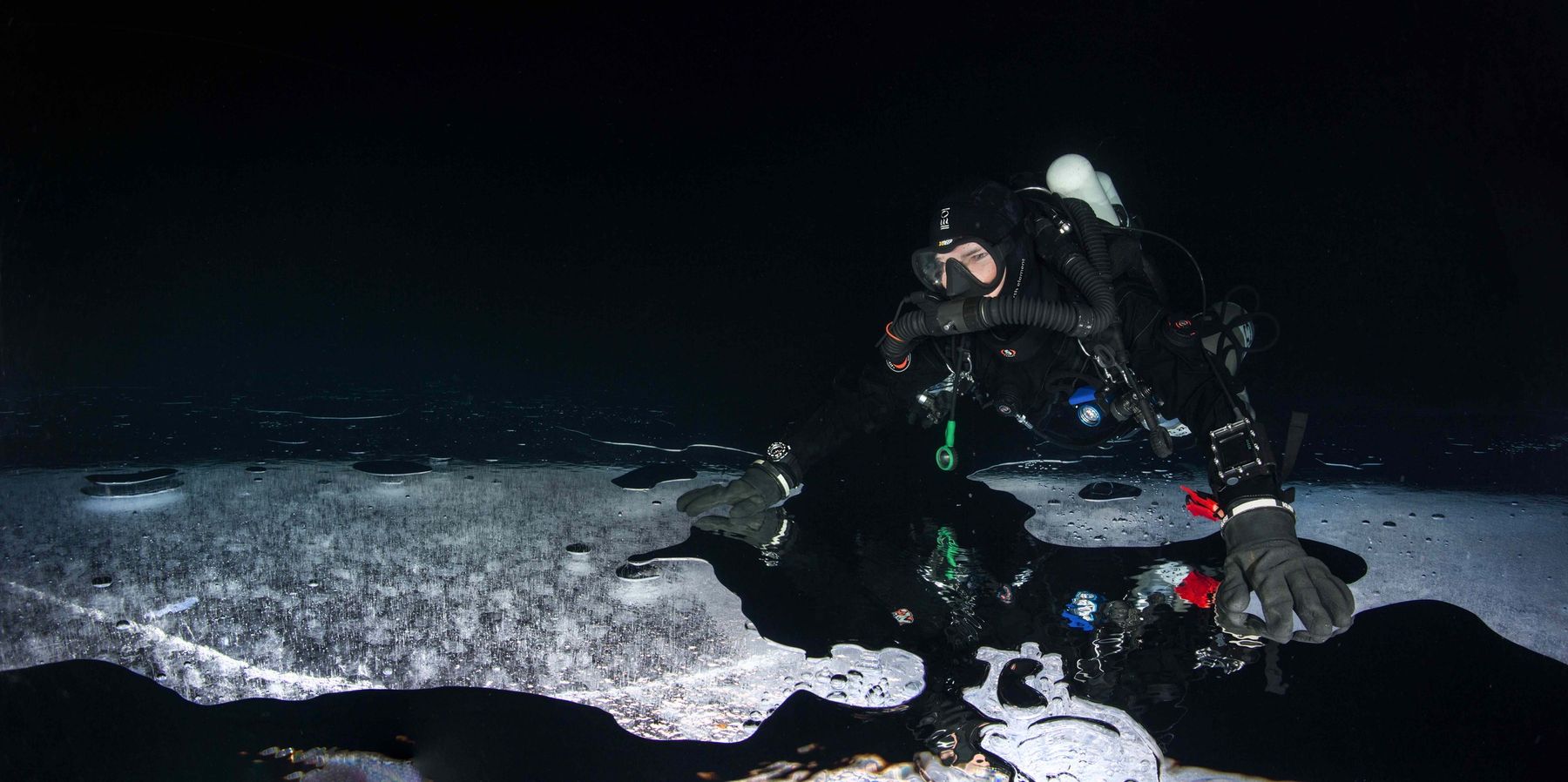 Photo: Pekka Tuuri