Courses · Rebreather
Rebreather courses Closed-circuit rebreather training.
A rebreather recycles your breathing gas, which allows for longer and deeper dives with optimised decompression. We teach on three units, from your first rebreather dives to deep mixed-gas dives, all under TDI.
-
Liberty · JJ · KISS · Triton
Units
-
5 levels
Air diluent to 100 m
-
TDI
Agency
Choose your rebreather
All courses are unit specific: you train and certify on the rebreather you will dive.
Divesoft Liberty
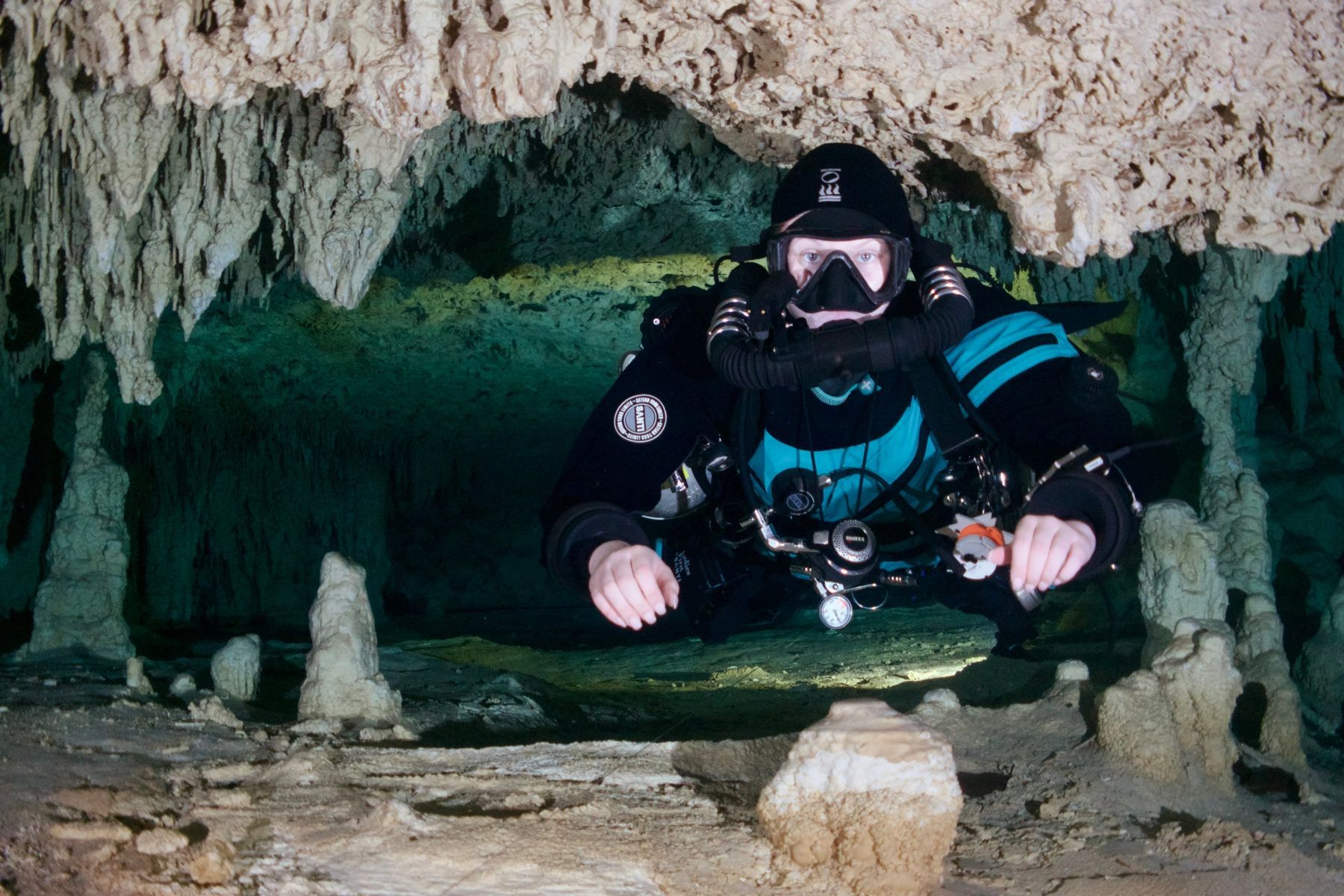
A Czech-built rebreather designed around redundancy, with two independent sets of electronics and batteries. Available in a backmount and a sidemount version (Liberty SM). Our own choice for long cave dives and deep exploration.
JJ-CCR
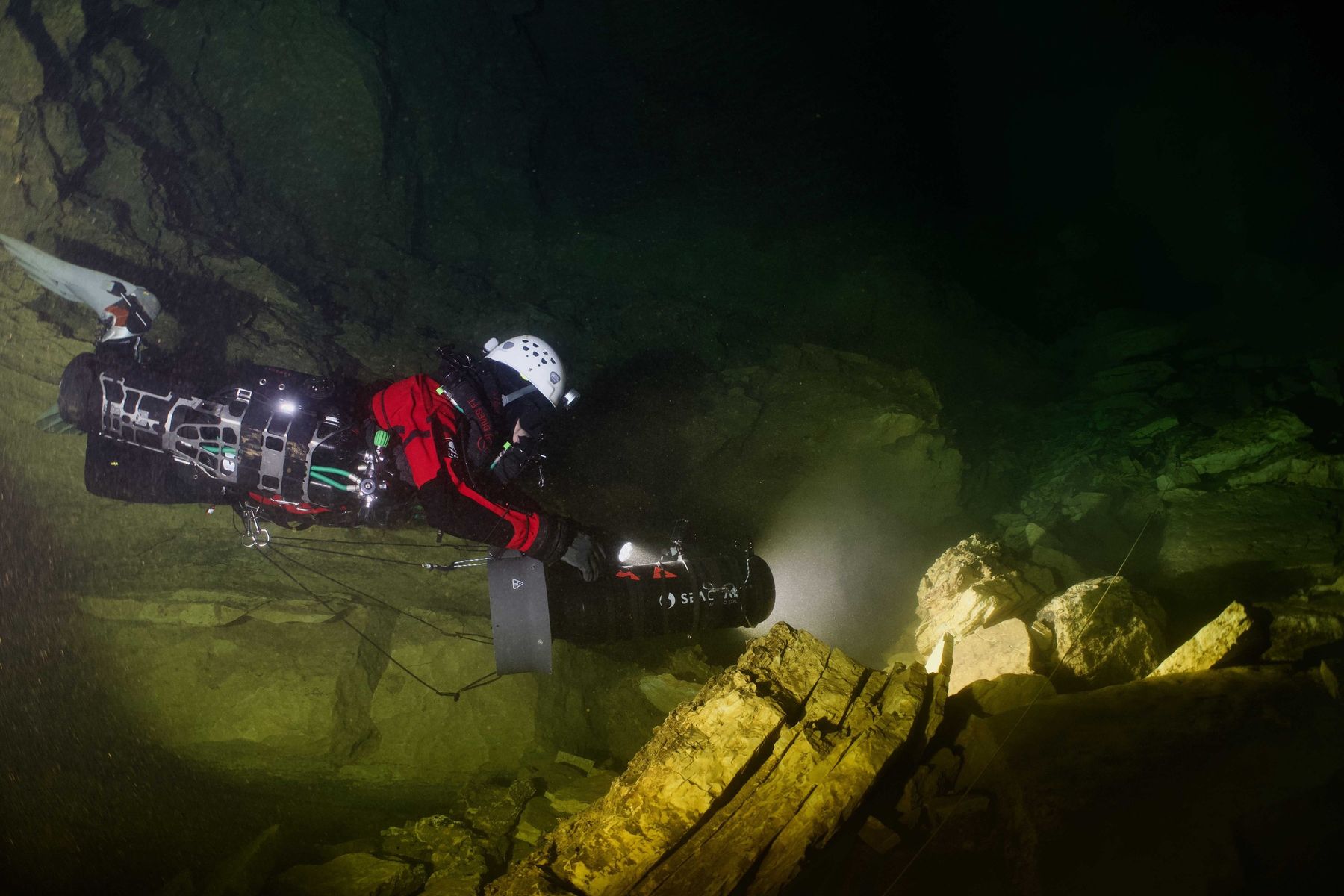
A robust, Scandinavian-designed backmount rebreather, popular with cave, mine and wreck divers in cold water. Simple to build, easy to maintain, and well suited to the Finnish mines.
KISS Sidewinder
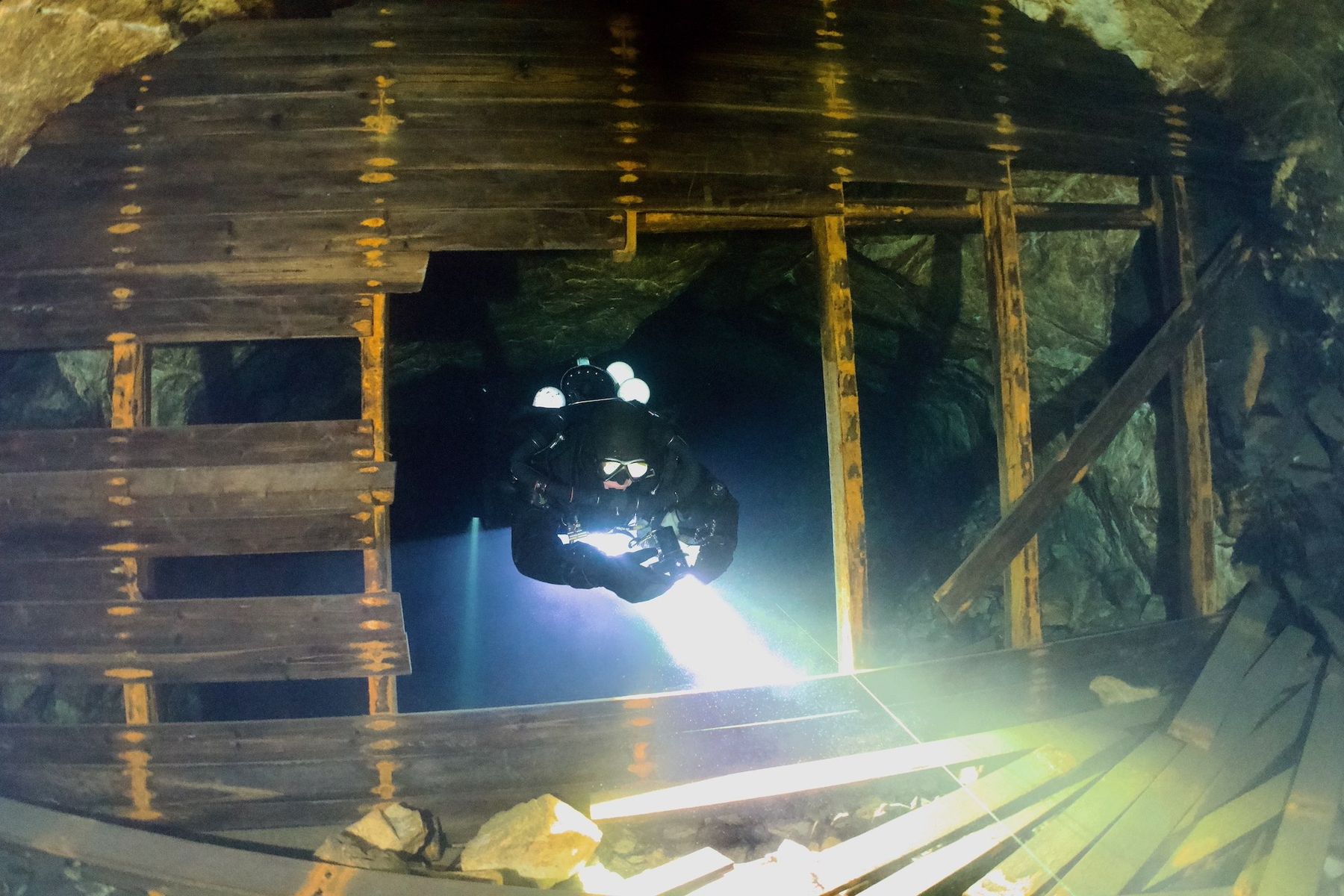
A lightweight sidemount rebreather with a mechanical oxygen feed. Small and easy to carry, it fits through tight restrictions and travels well, which makes it a favourite in caves such as Marchepied and Fontaine du Truffe. Sidemount certification is required first.
Triton
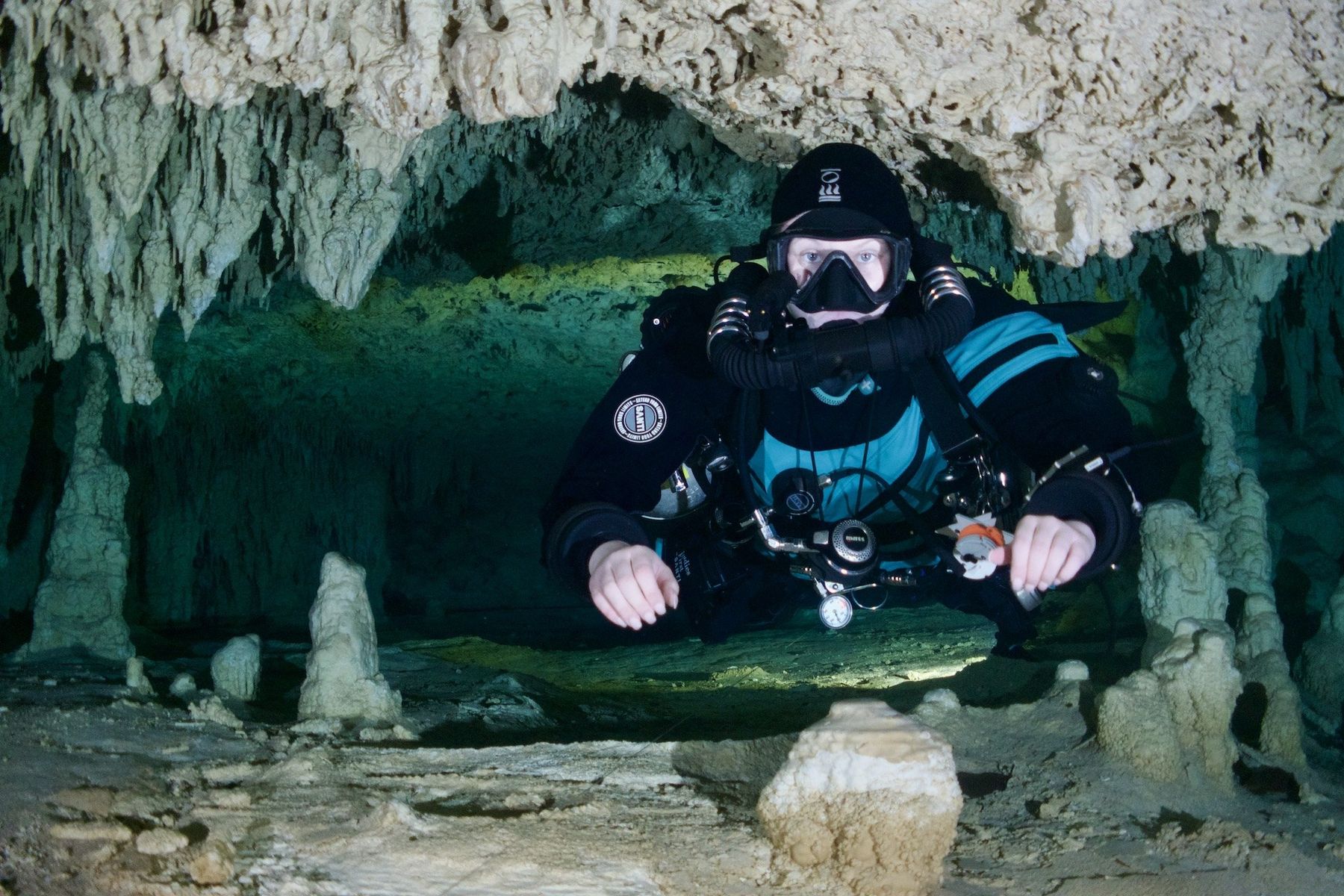
A chest-mounted mechanical rebreather made by M3S in France. Compact and simple, with the loop in front of the diver, and rated to 100 m on trimix.
Course levels
Five TDI levels, each taken on your own unit. Most divers start with Air Diluent and add levels as their experience grows.
| Course | Prerequisite | Training (minimum) | After the course |
|---|---|---|---|
| 1. CCR Air Diluent Diver | Nitrox Diver, 20 logged dives, age 18. Sidemount units: Sidemount Diver + 10 sidemount dives | 60 min confined water + 7 open water dives (420 min), 5 days | Air or nitrox diluent, max 30 m, no decompression |
| 2. CCR Air Diluent Decompression Procedures | Advanced Nitrox + Deco Procedures, 50 logged dives, 5 deco dives to 30 m. Or: CCR Air Diluent + 30 hours and 30 dives on the unit, 6 months' experience | 60 min confined water + 7 open water dives (420 min), 5 days | Decompression dives on air or nitrox diluent, max 40 m |
| 3. CCR Helitrox Diluent Decompression Procedures | As level 2, or Helitrox Diver | 60 min confined water + 7 open water dives (420 min), 5 days | Helitrox diluent (max 35% helium), max 45 m |
| 4. CCR Mixed Gas Diver | Level 2 or 3, 50 rebreather hours over 50 dives (25 on the unit), 10 deco dives to 30 m or deeper | 6 open water dives (360 min), 5 on trimix diluent, deepest to at least 55 m | Trimix diluent (min. 16% oxygen), max 60 m |
| 5. CCR Advanced Mixed Gas Diver | Level 4, 100 rebreather hours over 100 dives (50 on the unit), 10 mixed-gas dives deeper than 50 m | 7 open water dives (420 min), deepest to at least 85 m | Any suitable diluent, max 100 m |
These are the minimum standards. Courses can take longer.
Crossovers
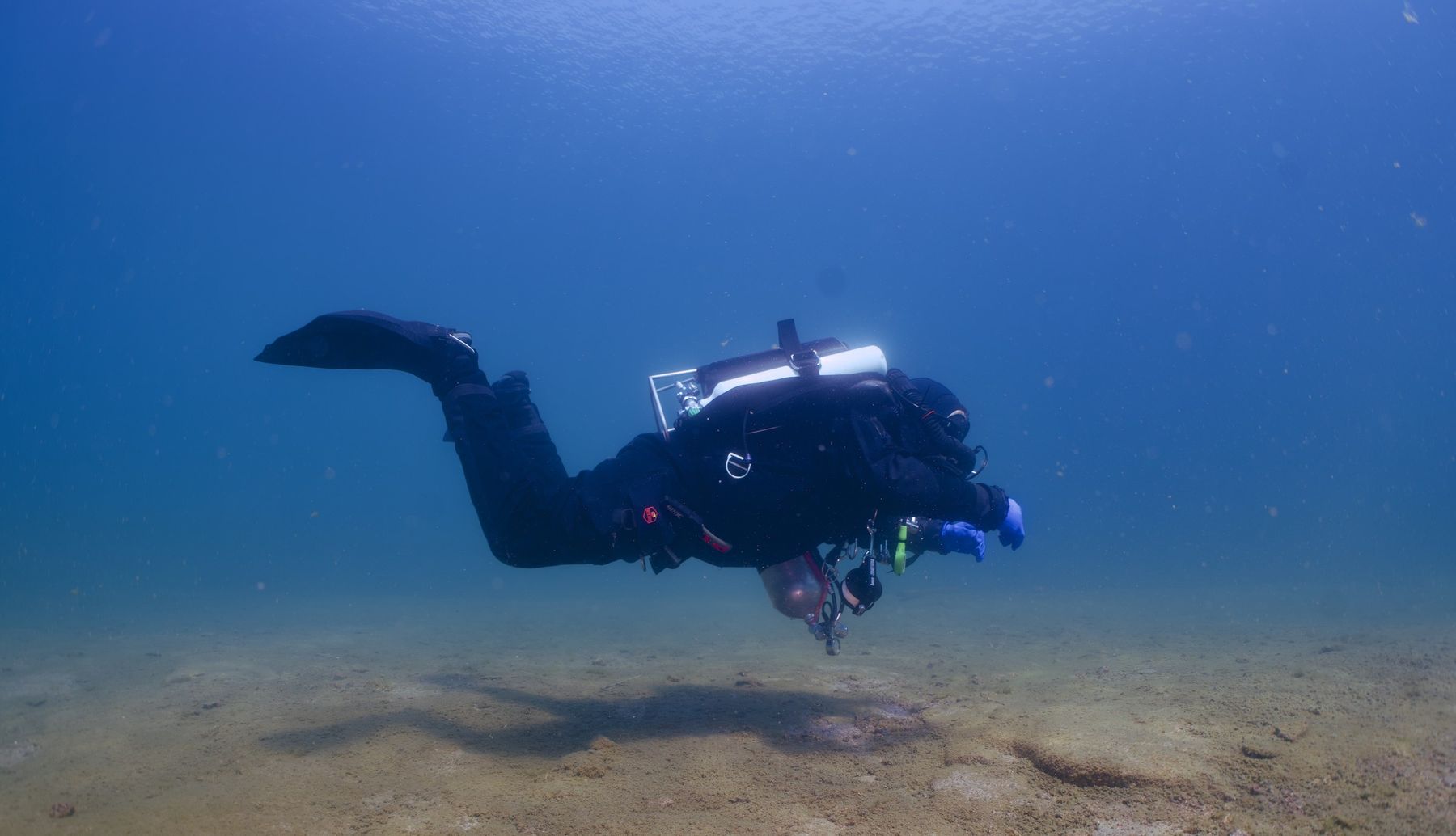
Already certified on another rebreather? A crossover moves your certification to a new unit at the same level, with a shorter course.
| Level | Crossover training (minimum) | Extra requirement |
|---|---|---|
| Air Diluent | 60 min confined water + 4 open water dives (240 min), max 30 m | 10 logged CCR dives in the last 12 months |
| Air Diluent Deco | 60 min confined water + 4 open water dives (240 min), max 40 m, two dives deeper than 30 m | 10 logged CCR dives in the last 12 months |
| Mixed Gas | Air Diluent Deco crossover + 2 trimix dives (120 min), max 60 m | |
| Advanced Mixed Gas | Both crossovers above + 2 dives between 60 m and 100 m (120 min) |
KISS divers moving from the Spirit to the Sidewinder need only an academic session on unit build and hose routing, plus 3 open water dives (180 min).
Prerequisites
The prerequisites for each course are set by TDI. You can find them on the official course pages:
- Air Diluent CCR Diver
- Air Diluent CCR Decompression Procedures Diver
- Helitrox CCR Diver
- Mixed Gas CCR Diver
- Advanced Mixed Gas CCR Diver
Where we train and how to book
First dives in the Finnish quarries (Hilloinen and Kaatiala), then the Montola and Ojamo mines, and the Lot caves in France. Courses in Thailand can be arranged through our partner instructors: see the Thailand page.
You train on your own unit. To book, send a message through the Contact page with the unit you dive (or want to dive), your current certification, logged dives and rebreather hours, and the dates that suit you. Price and dates on request.
FAQ
Questions about rebreather courses.
Can't find your question? Email us at [email protected]
-
Yes, you train on your own unit. Still choosing one? Ask via the Contact page and we will help you pick the right unit.
-
It depends on where you want to dive. Backmount units like the JJ-CCR and Divesoft Liberty suit mines and open water; sidemount units like the KISS Sidewinder and Liberty SM suit tight caves and travel. We're happy to talk it through before you buy.
-
At least 5 days under TDI standards, with about 7 hours of dives plus theory and a maintenance workshop.
-
Yes, if you are already an experienced technical diver: with Advanced Nitrox, Deco Procedures and 50 logged dives, you can start at the Air Diluent Decompression level.
-
Yes, through a shorter crossover course at your current level.
-
Yes. Cavern, Intro to Cave and Full Cave all have rebreather versions: see the Cave page.
Book a course
Interested in a course?
Tell us what you dive now and what you want to learn. We will suggest the right course and send you dates and a price.
 Photo: Pekka Tuuri