Dive sites · France
Ressel
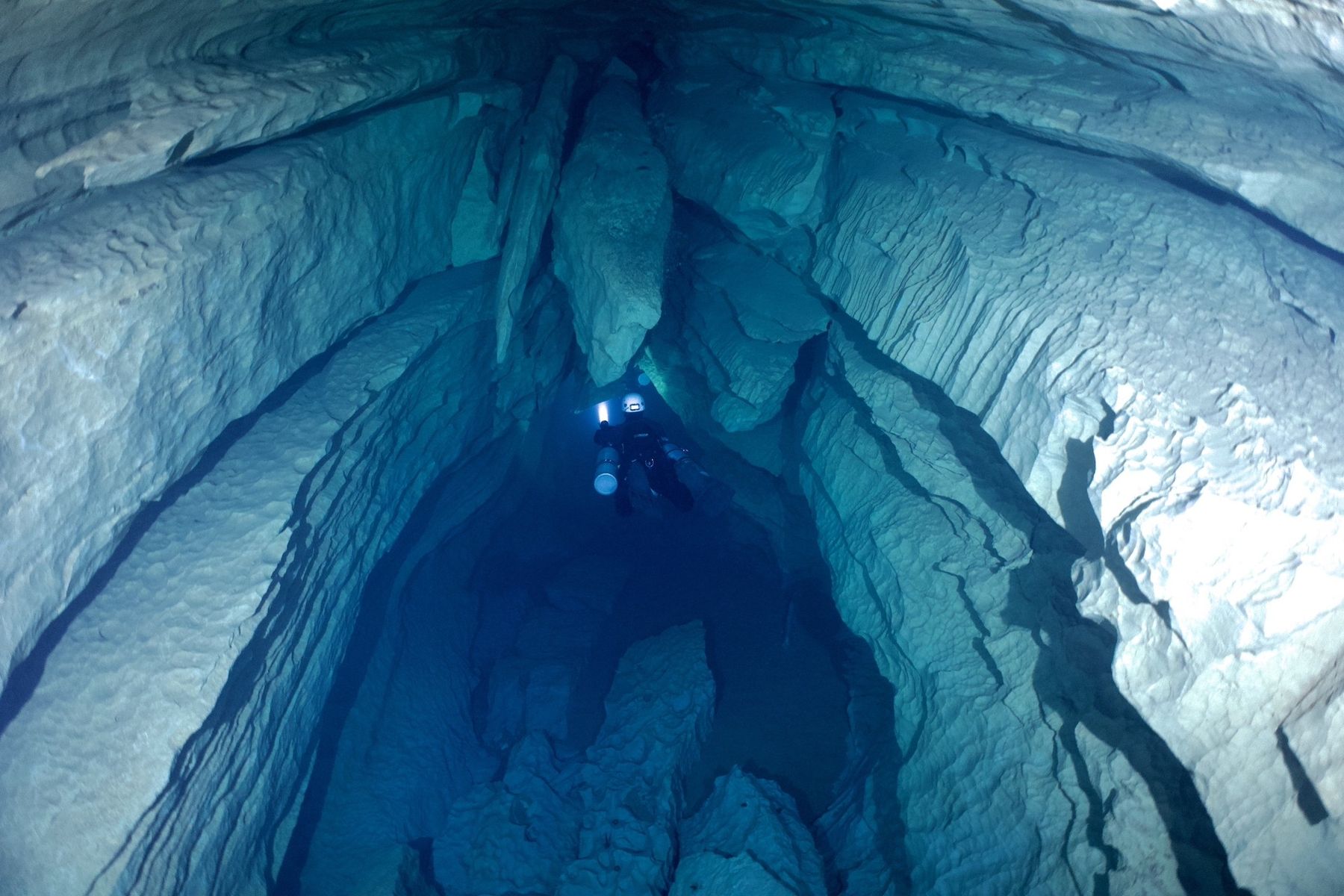
The classic cave dive of the Lot. Clear water, white limestone and a main line that runs from a 6 m entrance in the river Célé to deep shafts and five sumps.
-
83 m
Max depth
-
4,415 m main line
Length
-
About 14°C
Water
At a glance
| Country | France |
| Region | Lot, Occitanie. Marcilhac-sur-Célé, on the river Célé |
| Type | Limestone resurgence cave (flooded spring) |
| Maximum depth | 83 m (Sump 1) |
| Depth on the main route | Entry 6 m. About 30 m on the way to Puits 4, about 45 m at Puits 4 |
| Length | 4,415 m main line through 5 sumps. Sump 1 is 1,850 m |
| Water temperature | About 14°C |
| Visibility | Often more than 10 m; depends on the river and rainfall |
| Level required | Cave diver. Trimix and decompression training for the deep section beyond Puits 4 |
| Access | About 100 m walk from the car park by the river |
About the site
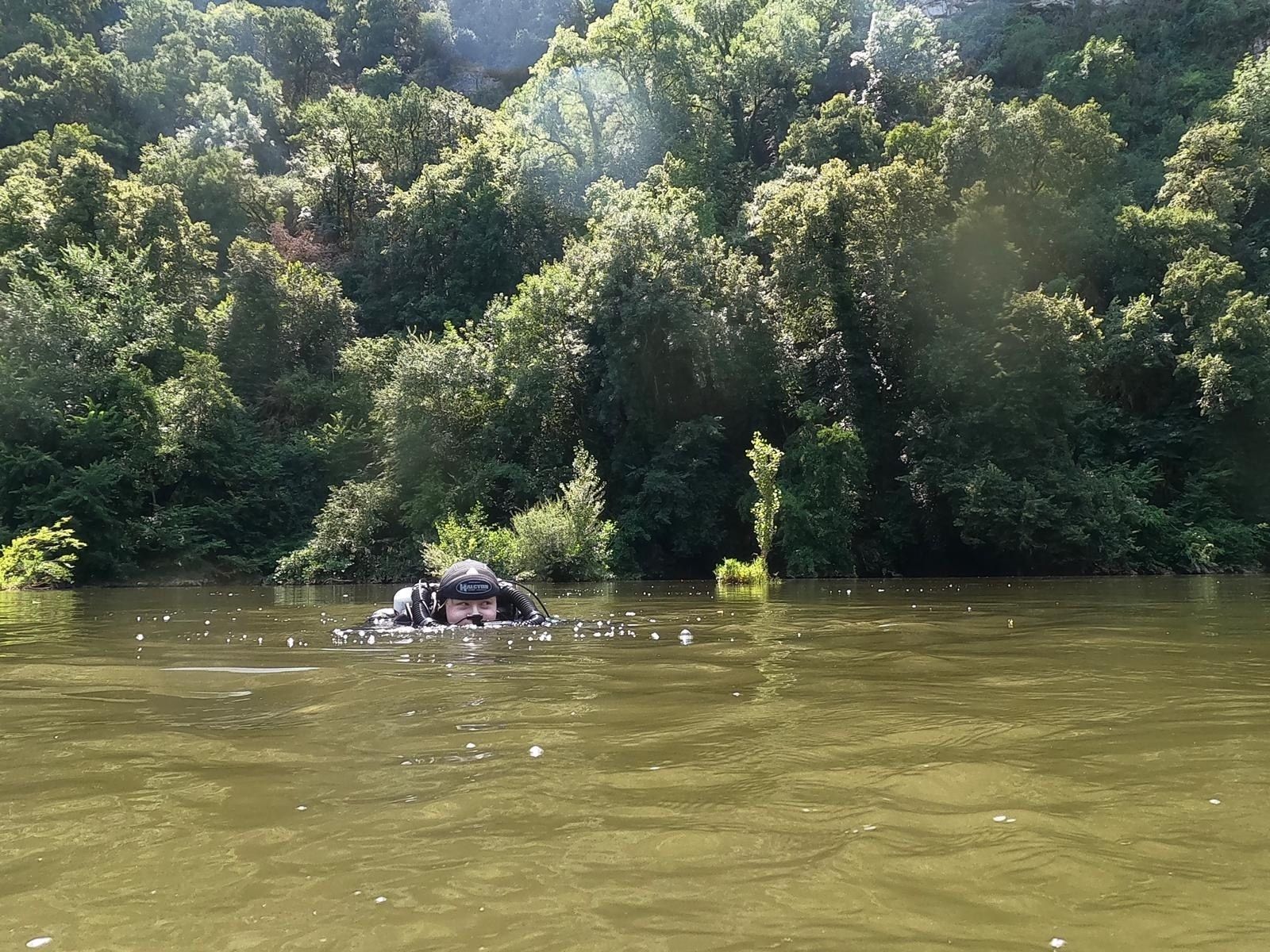
The Ressel is the best-known cave dive in France and one of the most visited in Europe. You kit up on the bank of the Célé at Marcilhac-sur-Célé, a short walk from the car park, and drop into the entrance at 6 m. A fixed rope leads to the main line, so you don't need to lay your own primary reel.
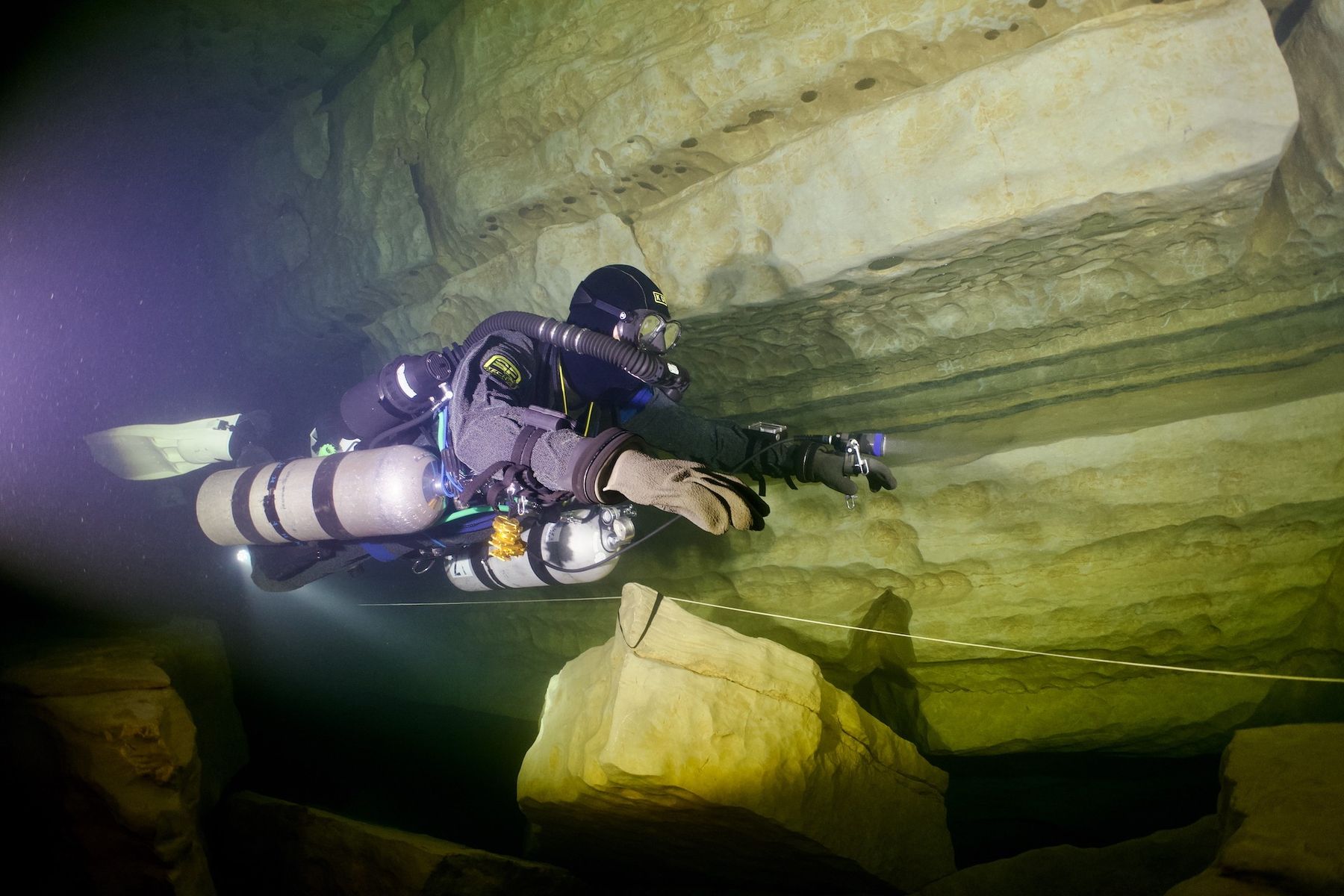
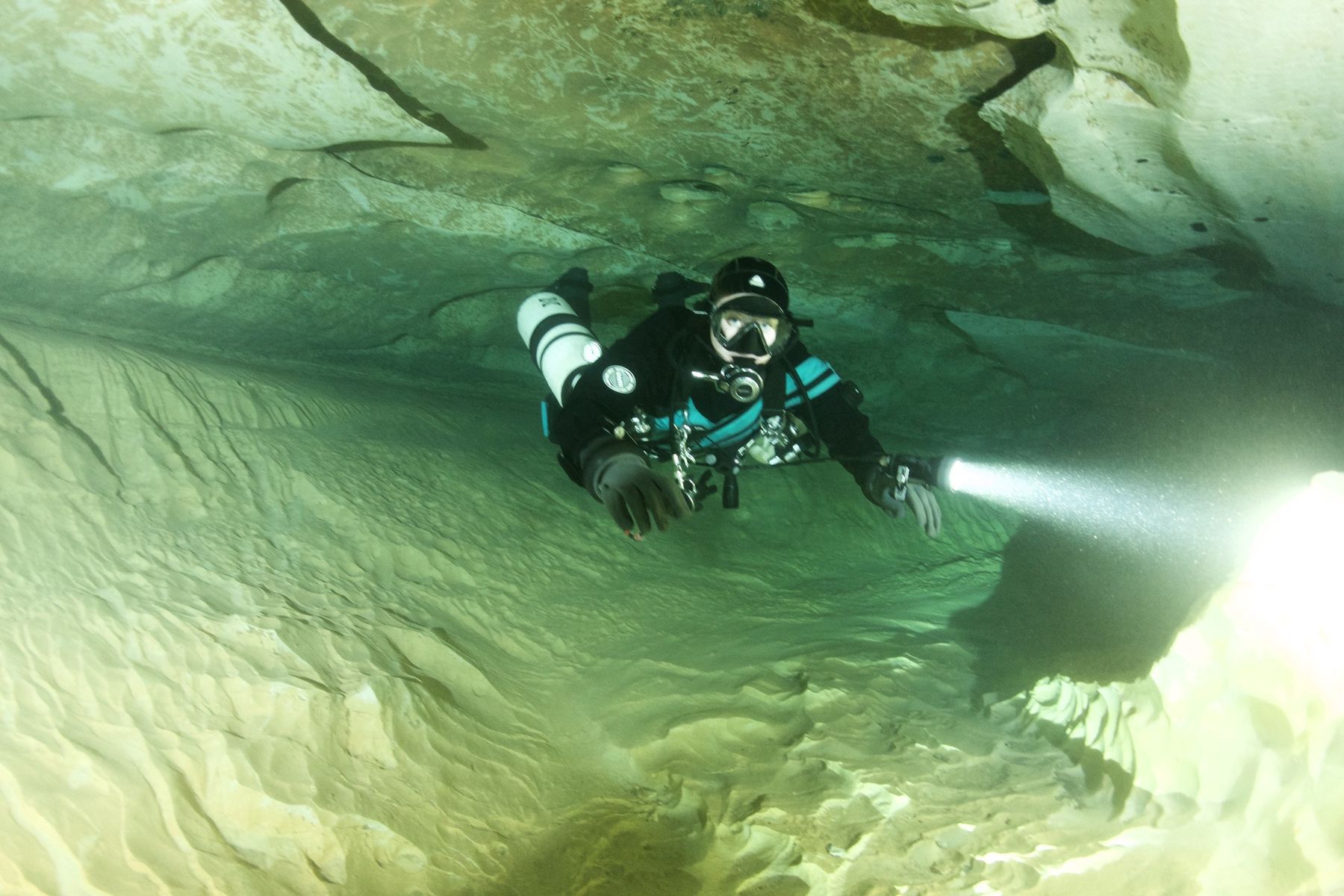
The first part of the cave is wide and pale, with layered limestone walls. The first T is at about 180 m. From there the line drops through a shaft to around 30 m and on to Puits 4, at about 45 m. This is where most recreational dives turn. Beyond Puits 4 the cave becomes a deep dive: Sump 1 runs for 1,850 m and reaches 83 m before rising to Lac Isler, the first air chamber.
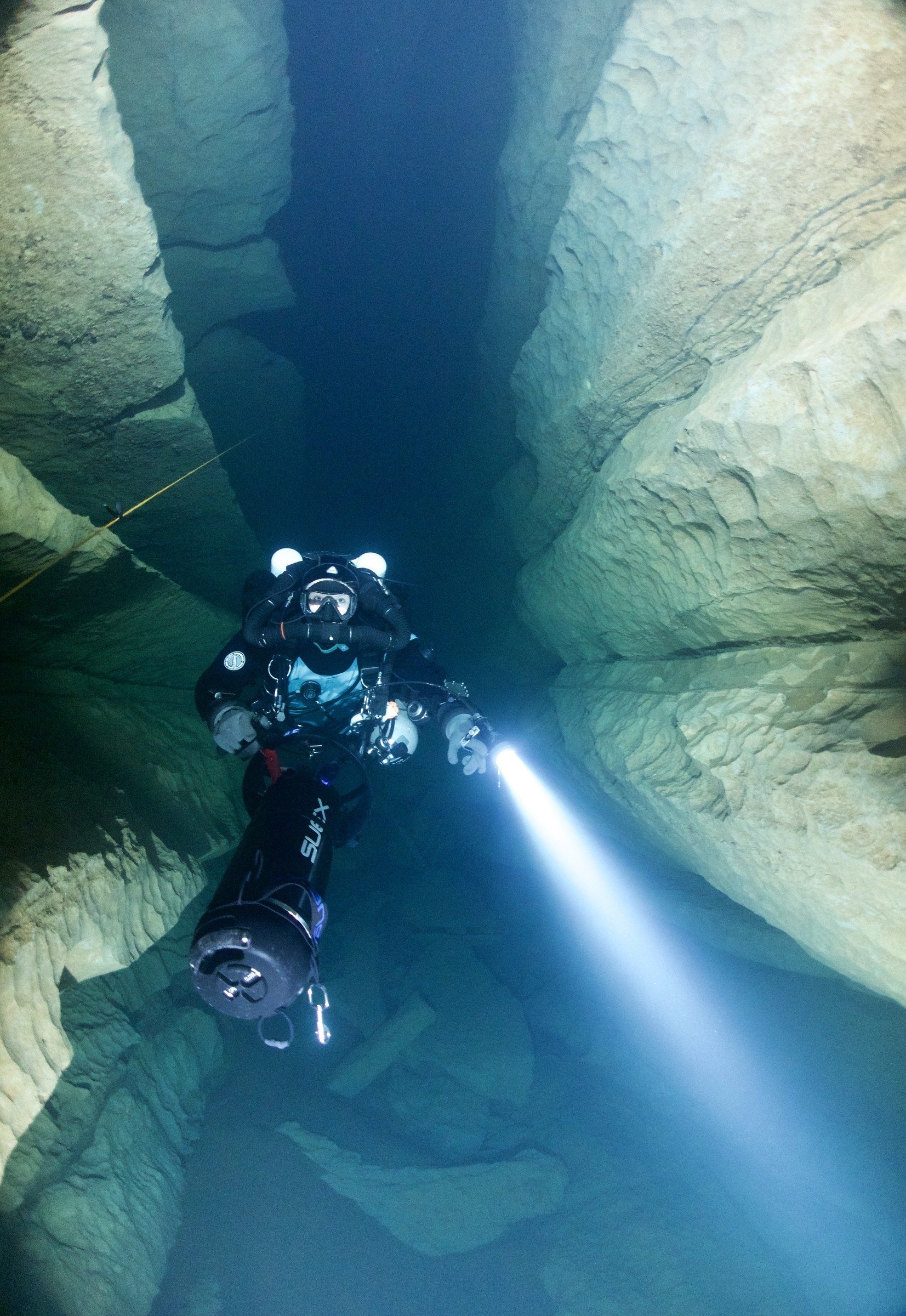
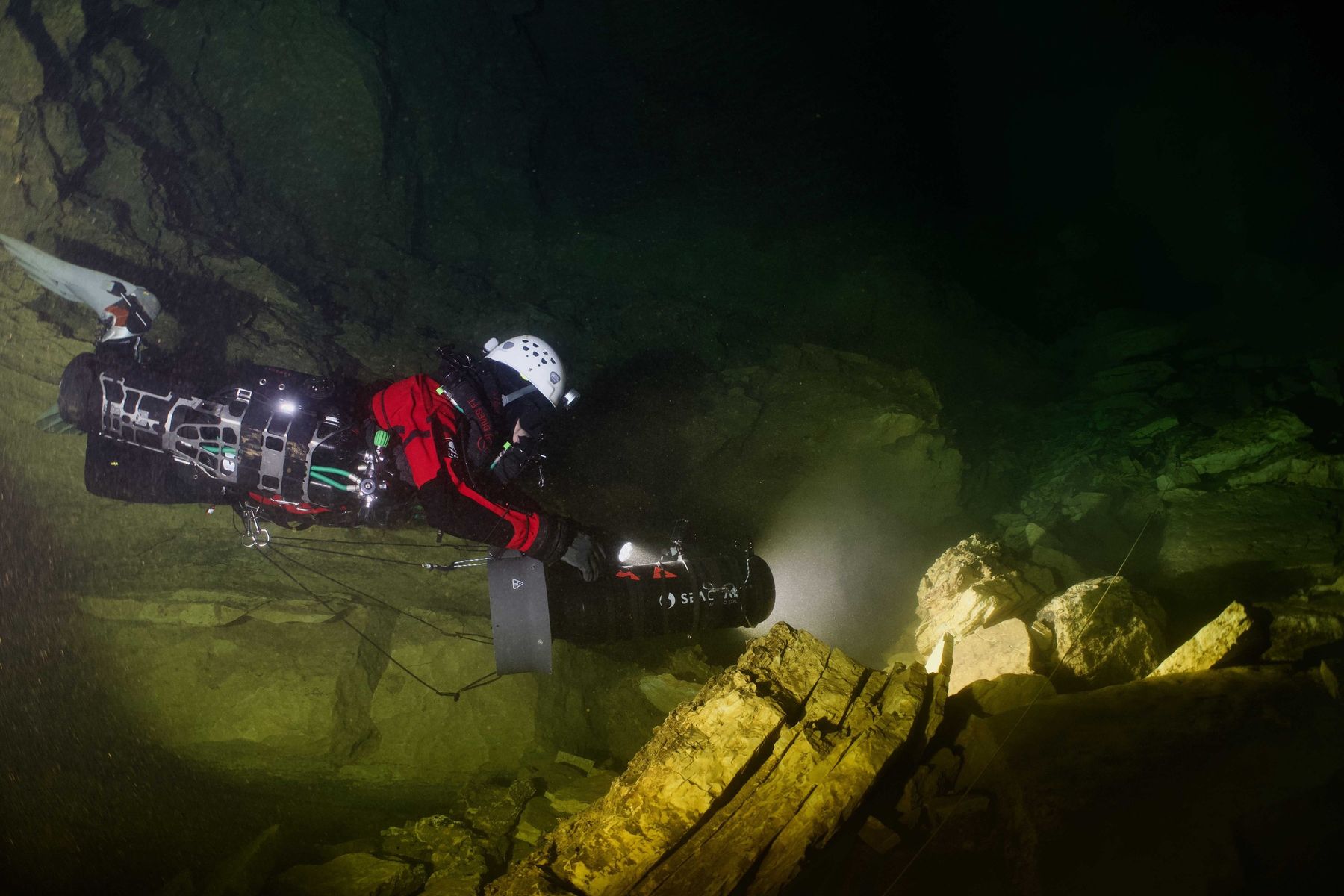
That range is what makes the Ressel special. Newly trained cave divers can enjoy the shallow section, while rebreather and trimix divers use the same entrance for long, deep dives with scooters. Visibility is usually more than 10 m, but it depends on the river: after heavy rain the flow picks up and the water turns cloudy.
Exploration history
| Year | What happened |
|---|---|
| 1968 | Martin and Debras (Spéléo-club Auvergnat) make the first dive and reach 150 m |
| 1973 | The line is extended to 300 m, at up to 30 m depth |
| 1975 | Fantoli and Touloumdjian reach Puits 4 at 45 m |
| 1981 | Jochen Hasenmayer pushes far into Sump 1. The knife he left as a line anchor is still in the rock |
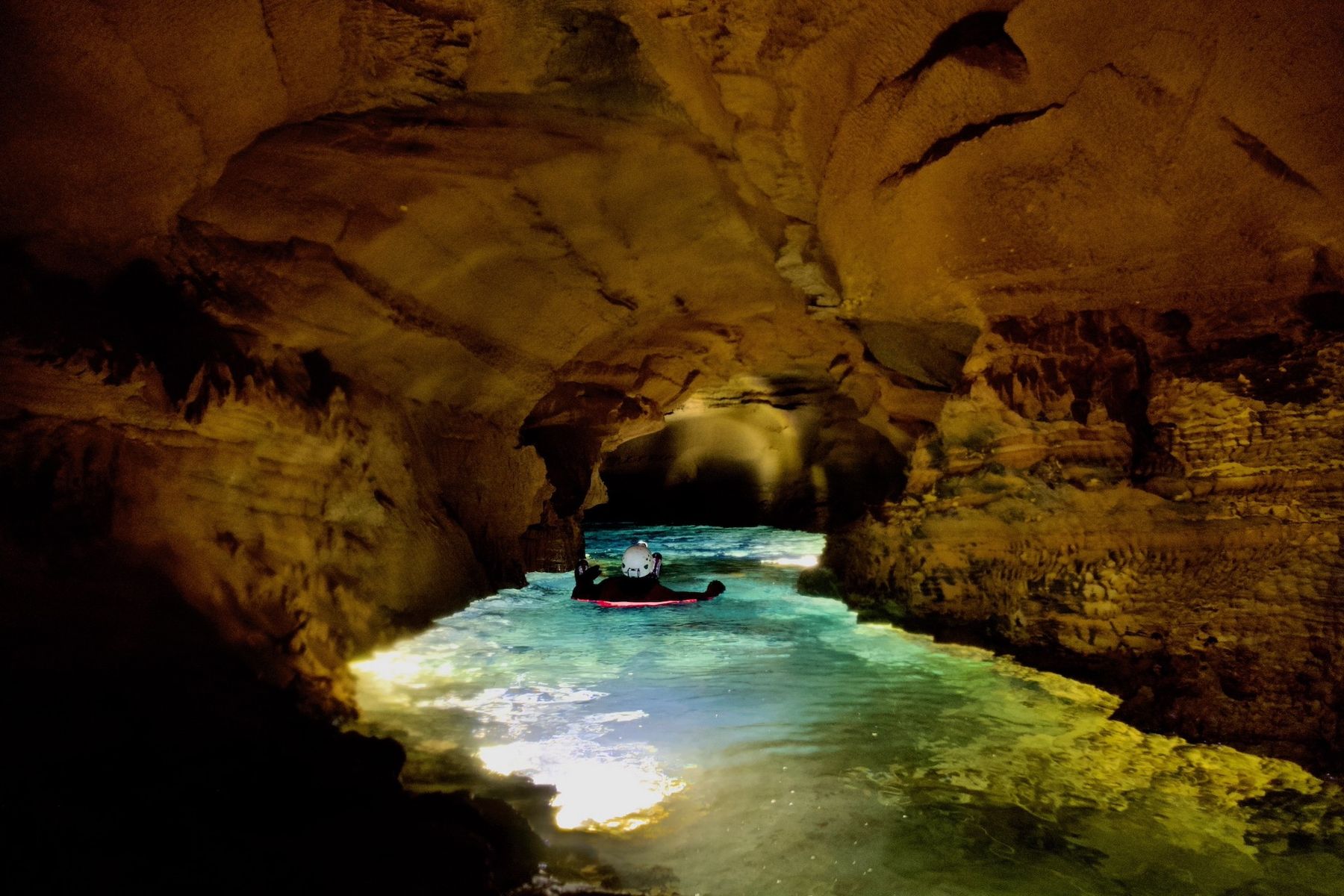
| 1990 | On 12 August, Olivier Isler is the first to pass Sump 1, surfacing in the air chamber now called Lac Isler, in a dive of 10 h 35 min |
| 1998 | Rick Stanton and Jason Mallinson pass Sumps 2 to 4 and reach Sump 5, about 3 km from the entrance |
| 1999 | Stanton, Mallinson and Reinhard Buchaly go beyond Sump 5 and explore about 1 km of new passage, in a 49-hour trip |
| 2011 | Stanton and John Volanthen lay another 805 m of line beyond Sump 5 |
Training at this site
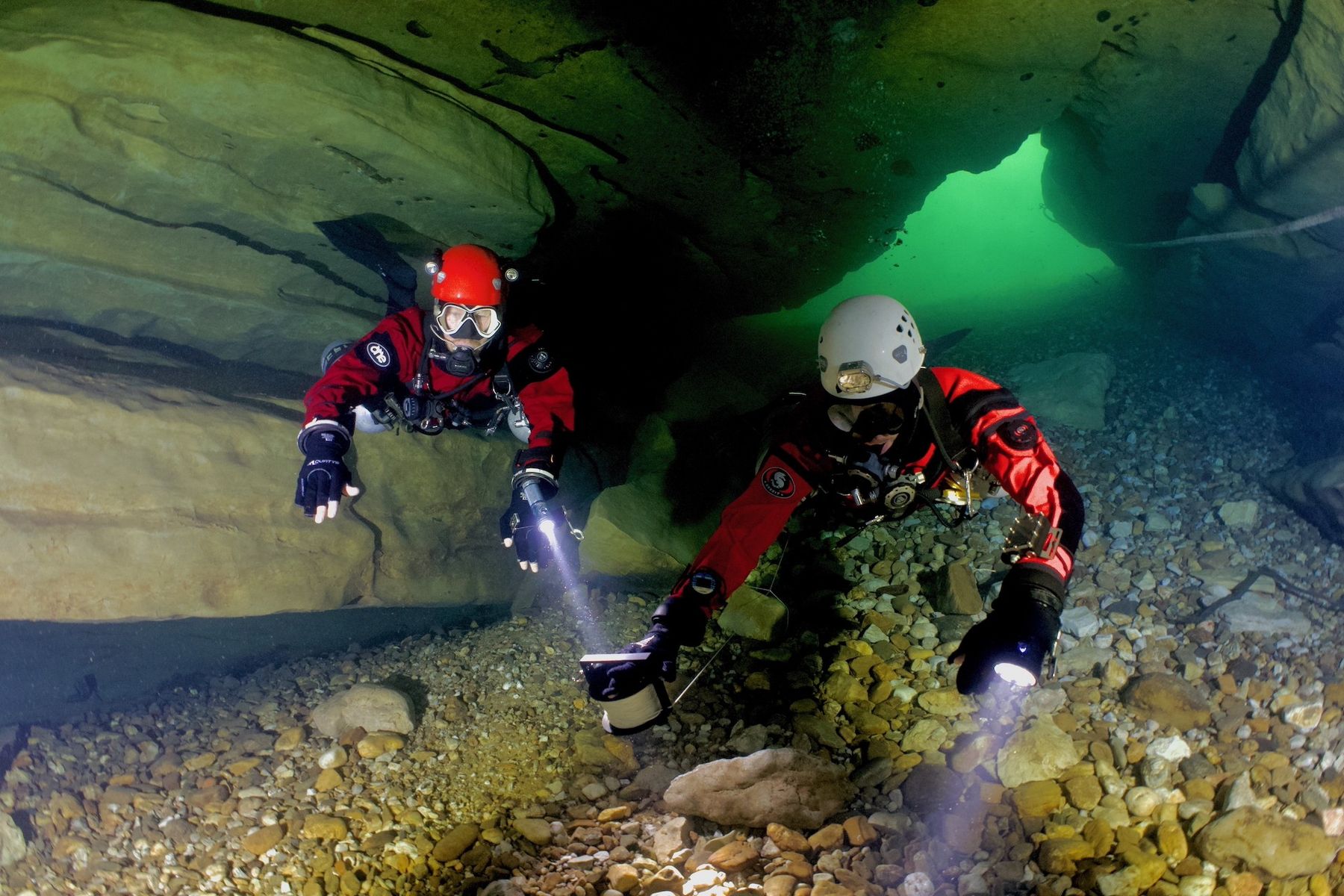
Courses we run here: Cave courses (Cavern, Intro to Cave, Full Cave), DPV Overhead. Price and dates on request.
Training
Training at Ressel.
Courses at this site: Cave courses (Cavern, Intro to Cave, Full Cave), DPV Overhead. Tell us what you dive and we will send dates and a price.
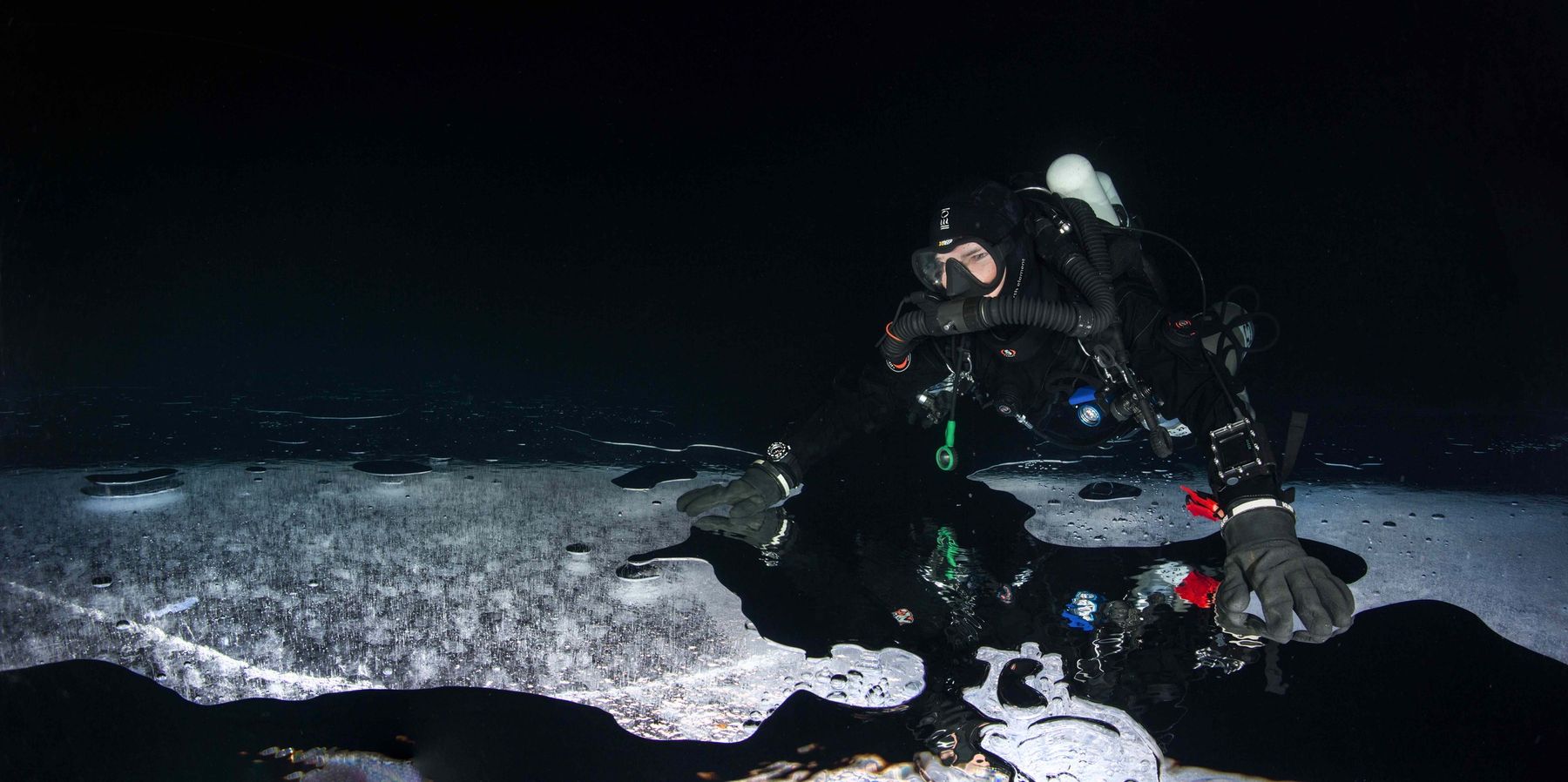 Photo: Pekka Tuuri